
What if the hardest part of building an app was no longer building it at all?
An app idea could start in a moment of inspiration, during a meeting, on a walk, or in the middle of the night with a quick note on your phone. Bringing that idea to life, however, was rarely as simple.
It often meant searching for the right developers, explaining your vision repeatedly, reviewing designs, negotiating timelines, balancing budgets, and waiting through rounds of changes before seeing something real. In that gap between imagination and execution, many promising ideas struggled to keep their momentum.
Now something very different is happening.
A solo founder with a laptop can build in days what once took teams months. A designer can move beyond mockups and launch working products. A marketer with zero coding background can test an idea before spending a dollar on development.
The reason is simple.
Artificial intelligence is changing how apps get built.
Not by replacing creativity. Not by removing strategy. But by removing friction.
Today’s smartest tools do not just generate code. They help shape ideas, design interfaces, organize logic, build workflows, connect data, and in many cases, deploy complete products.
The best part is that you do not need to be an engineer to use them.
So if you have been wondering which platforms are actually worth exploring, here are the top AI tools that are making app development feel surprisingly effortless in 2026.
1. Rocket.new
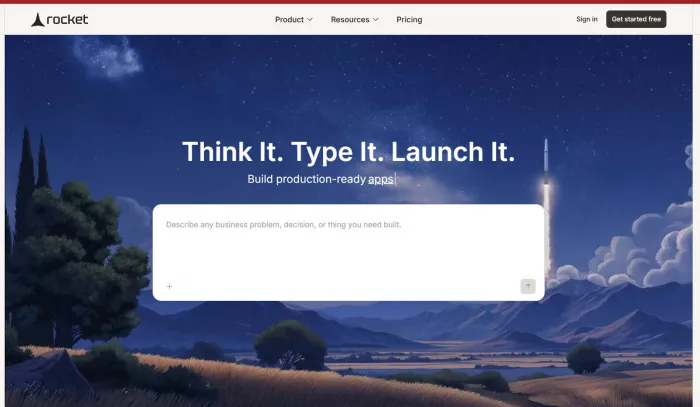
Some tools help you design screens. Some help you generate code. Rocket takes a bigger approach.
Instead of jumping straight into development, Rocket works as a vibe solutioning platform that helps you think through the idea, build the product, and stay aware of what is happening in your market, all in one place.
It brings together three powerful experiences. Solve helps you validate ideas, explore opportunities, and shape product direction. Build turns those ideas into real web or mobile apps. Intelligence helps you track competitors, market changes, and new opportunities after your product goes live.
What makes Rocket stand out is that it does not start with screens or code. It starts with the problem you are trying to solve.
You can begin with a simple idea, a prompt, a design file, a screenshot, or even an existing website. From there, Rocket helps turn that input into a working product with the interface, logic, workflows, and deployment already connected.
That makes Rocket feel less like just another AI app builder and more like a platform that helps you move from an idea to a real product with much more clarity and speed.
Best for:
● Founders validating new ideas
● Teams building MVPs faster
● Designers turning concepts into live products
● Businesses that want strategy, building, and market insights in one place
2. Bubble
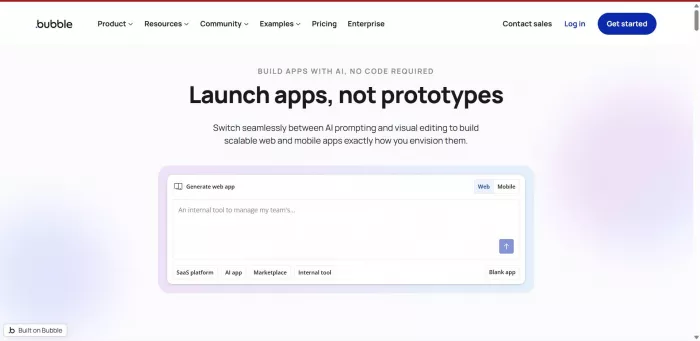
Bubble has been around long enough to earn trust, and it continues to evolve.
What makes Bubble powerful is how it lets you build real applications visually. Instead of writing code line by line, you drag, drop, connect, and configure.
Need user accounts?
Done.
Need payment processing?
Simple.
Need dashboards, forms, workflows, or messaging?
It is all possible.
What makes Bubble even stronger now is its growing use of AI features that help speed up setup, workflow creation, and design suggestions.
Bubble still has a learning curve, but once it clicks, it feels like having an entire development studio inside your browser.
Best for:
● SaaS products
● Internal tools
● Marketplaces
● Subscription platforms
3. Lovable
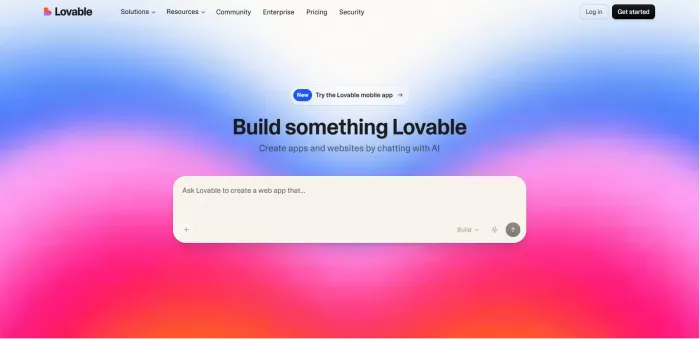
Lovable has become popular for one simple reason.
It feels human.
Instead of forcing you into menus and settings, Lovable invites you to describe what you want in plain language.
You might type:
"Build a booking app for photographers."
Or:
"Create a task manager for remote teams."
And within moments, you start seeing a real product take shape.
Layouts appear.
Pages connect.
Logic begins to form.
It feels less like software development and more like collaboration.
For creators who want speed without complexity, Lovable offers a refreshing experience.
Best for:
● First-time founders
● Product experiments
● Fast prototypes
● Small business apps
4. Replit
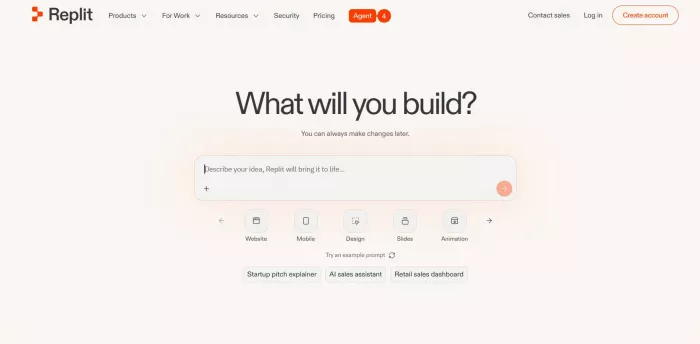
Replit started as a place to write and run code online.
Today, it feels much bigger.
Its AI capabilities now help generate features, fix bugs, suggest improvements, and accelerate product development in ways that feel almost conversational.
You describe what you need.
Replit helps build it.
Then improve it.
Then help deploy it.
For developers, it feels like an extra teammate.
For beginners, it removes a lot of fear.
Best for:
● Developers building fast
● Startup prototypes
● Educational projects
● Quick deployment
5. FlutterFlow
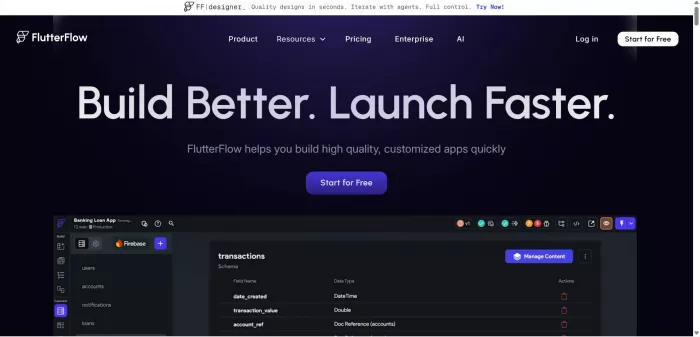
If mobile apps are your focus, FlutterFlow deserves attention.
It combines visual design with real app functionality, allowing users to create polished mobile experiences without starting from scratch.
What makes it stand out is how AI can assist with layout generation, workflow suggestions, and content creation.
You can build:
● E-commerce apps
● Fitness apps
● Booking apps
● Community platforms
And the result often feels surprisingly polished.
For teams focused on mobile-first experiences, FlutterFlow is hard to ignore.
Best for:
● Mobile startups
● Product designers
● Cross-platform apps
● MVP launches
6. Softr
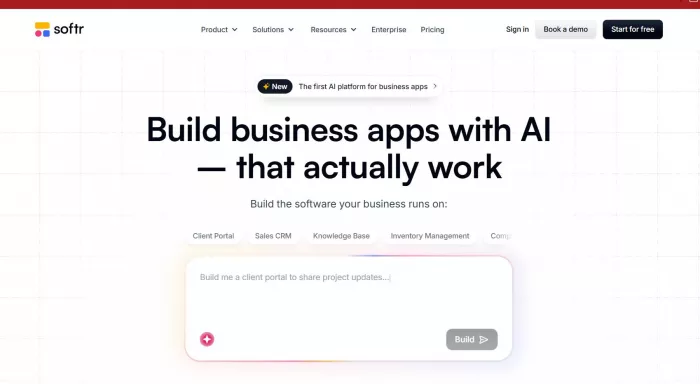
Softr is proof that simple does not mean limited.
Its biggest strength is speed.
You connect your data.
Choose a layout.
Describe your product.
And suddenly you have something usable.
AI helps with content suggestions, page creation, workflow setup, and structure recommendations.
If your goal is building internal tools, portals, dashboards, or customer experiences quickly, Softr can save weeks.
Best for:
● Business dashboards
● Client portals
● Membership sites
● Internal apps
7. Glide
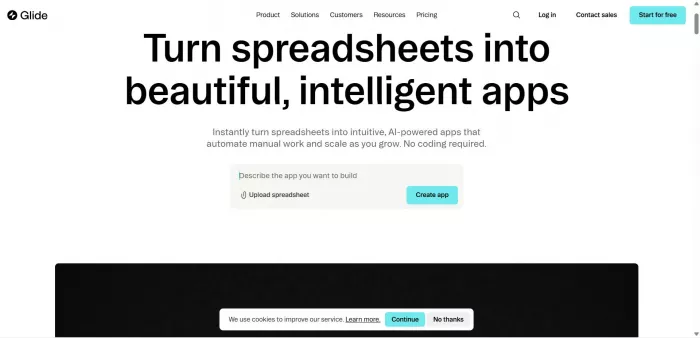
Glide makes app creation feel approachable.
Its interface feels clean.
Its setup feels intuitive.
And its AI features make it even easier to transform data into working apps.
Many businesses use Glide to create:
● Inventory tools
● Field service apps
● Employee directories
● Scheduling platforms
You do not need a technical background to get results.
That alone makes Glide incredibly appealing.
Best for:
● Small businesses
● Operations teams
● Quick internal solutions
● Lightweight mobile apps
8. Bolt
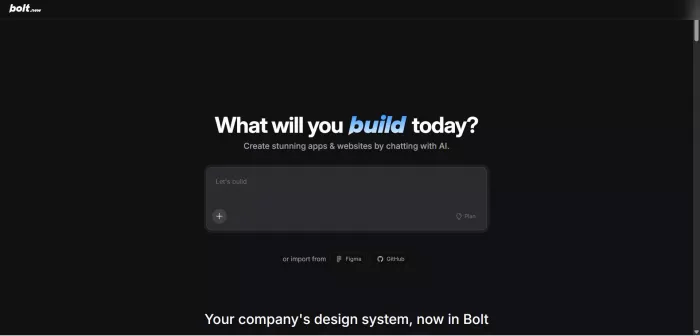
Bolt is one of the newer names attracting serious attention.
Its promise is simple:
Describe what you want.
Watch it get built.
Bolt focuses heavily on speed and instant feedback, making it feel almost magical during early product creation.
Need a dashboard?
Need authentication?
Need user profiles?
Bolt can assemble the foundations quickly.
It is ideal when momentum matters more than perfection.
Best for:
● Rapid prototyping
● Startup validation
● Solo builders
● Product experiments
9. Adalo
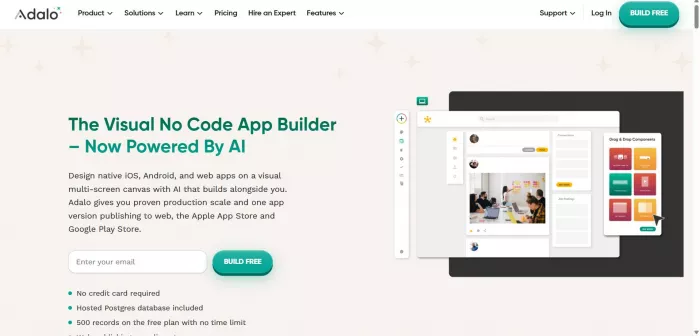
Adalo continues to be a favorite for people building mobile-first products.
Its drag-and-drop experience is easy to understand, and AI-powered suggestions now help with layouts, workflows, and user journeys.
You can move from idea to clickable product surprisingly fast.
And for many creators, that first working version is all they need to validate demand.
Best for:
● Mobile apps
● Consumer products
● Early-stage startups
● Community platforms
10. Cursor
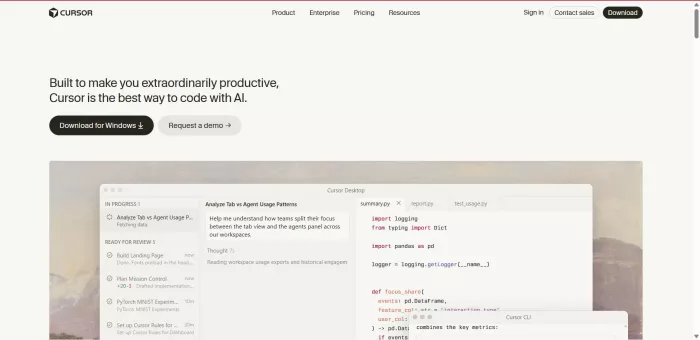
Cursor takes a slightly different approach.
Instead of replacing coding completely, it makes coding feel dramatically easier.
Its AI understands context, suggests improvements, fixes issues, and helps generate new features while you work.
Developers love it because it removes repetitive work.
Founders love it because products move faster.
And teams love it because productivity rises almost immediately.
Best for:
● Developers
● Startup teams
● Product engineers
● Existing software projects
What Makes These Tools So Powerful?
It is not just that these platforms build apps.
It is how they remove the things that used to slow people down.
Here is what the best tools do differently:
They start with ideas, not setup
Old development often began with files, frameworks, and infrastructure.
Modern platforms begin with conversations.
You describe the outcome.
The tool helps shape the product.
They shorten feedback loops
Instead of waiting weeks to see progress, you see results almost instantly.
That changes everything.
Because ideas improve when you can test them quickly.
They make experimentation affordable
Before AI, trying an idea could cost thousands.
Now you can test, adjust, and validate without major risk.
That opens doors for:
● Solo founders
● Small businesses
● Agencies
● Creators
● Students
They make creativity practical
An idea in your notebook means nothing.
An idea in users’ hands changes everything.
These tools help close that gap.
So Which One Should You Choose?
The answer depends on what you want to build.
If you want to shape an entire product experience from idea to deployment, Rocket stands out because it thinks beyond screens and code, helping teams move from concept to real solutions with much more clarity.
If you want visual flexibility, Bubble or FlutterFlow are strong choices.
If you want speed and simplicity, Lovable, Glide, or Softr are excellent.
If you already write code and want AI assistance, Replit or Cursor can transform your workflow.
And if you are simply exploring what an AI app builder can do for your next product, any of these platforms can open your eyes to what is now possible.
The Bigger Shift Nobody Can Ignore
We are entering a world where software creation feels less like engineering and more like conversation.
You describe.
The platform understands.
The product begins to take shape.
That changes who gets to build.
It changes who gets to launch.
And perhaps most importantly, it changes how fast ideas can become reality.
The best AI app builder is not necessarily the one with the most features.
It is the one that removes the most friction between your idea and your first real user.
And in 2026, that journey has never felt easier.


Comments