Where SaaS Tools Actually Get Discovered And Which Platforms People Genuinely Trust

Trevor Hall
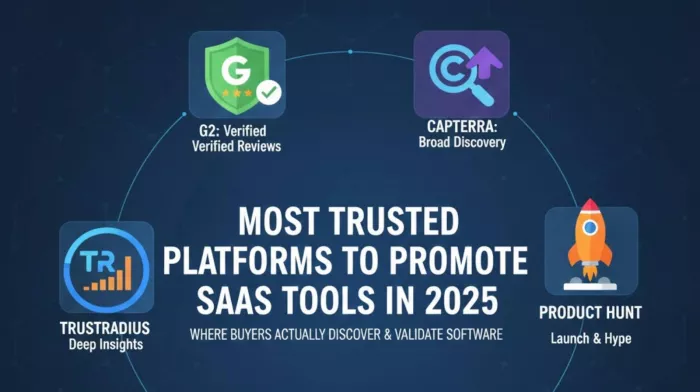
Table of Contents
- Why Trust Matters More Than Reach in SaaS Promotion
- How SaaS Tools Are Actually Discovered in 2025
- Review Platforms That Shape Buying Decisions
- Launch Platforms vs Discovery Platforms
- Directories That Capture Intent-Driven Traffic
- Regional Platforms That Earn Local Trust
- Deal Marketplaces and Their Actual Role
Meta description: A grounded, research-backed analysis of the Most Trusted Platforms to Promote SaaS Tools, based on how buyers actually discover, evaluate, and validate software in 2025.
If you strip SaaS marketing down to its essentials, promotion has very little to do with exposure and almost everything to do with risk reduction.
Buyers don’t want to “find” tools anymore. They want to avoid choosing the wrong one.
That’s why the Most Trusted Platforms to Promote SaaS Tools aren’t defined by hype, launches, or virality. They’re defined by three quiet forces that shape nearly every B2B buying decision today:
verified peer feedback, search-driven discovery, and long-term credibility.
This article looks at where SaaS tools actually get discovered in 2025 — and why only a small group of platforms consistently influence real purchase decisions.
Why Trust Matters More Than Reach in SaaS Promotion

SaaS buyers rarely act alone. Even small purchases are often validated internally, and larger ones can trigger weeks of evaluation.
In that context, trust isn’t emotional — it’s procedural.
A “trusted” platform helps buyers:
● compare tools without sales pressure
● understand real limitations, not just benefits
● justify decisions to stakeholders
Platforms that fail to do this may generate traffic, but they don’t meaningfully influence outcomes. Over time, buyers learn which sources reduce uncertainty — and they return to those sources again and again.
That’s why trust compounds on a few platforms and evaporates everywhere else.
How SaaS Tools Are Actually Discovered in 2025
Despite changes in channels and tactics, discovery patterns have remained remarkably stable.
Most SaaS tools enter consideration through:
● high-intent Google searches (category, comparison, or alternative-based)
● review platforms used for validation
● internal shortlists cross-checked against public feedback
Social platforms may spark awareness, but they rarely close the loop. Forums restrict promotion. Cold outreach creates friction. Even referrals are usually verified externally before action is taken.
This behavior naturally concentrates attention on platforms built around reviews, comparisons, and search visibility, not launches or announcements.
Review Platforms That Shape Buying Decisions
G2: The Default Validation Layer
G2’s influence comes from scale and verification rather than persuasion.
With over 1.5 million verified reviews, it has become a reference point not just for buyers, but for procurement teams, analysts, and investors. Its category pages dominate search results, and its comparison grids simplify shortlisting for complex decisions.
What makes G2 effective isn’t marketing polish — it’s density. Buyers trust it because enough people like them have already spoken.
The trade-off is competitiveness. Without an active review strategy, products quickly fade into obscurity. But when used intentionally, G2 remains one of the strongest trust signals in SaaS.
Capterra: Broad Discovery With Commercial Influence
Capterra excels at volume. As part of Gartner Digital Markets, it captures a massive share of SMB and mid-market searches across hundreds of software categories.
Its strength lies in reach and accessibility. Its limitation is visibility mechanics. Paid placements can influence which tools buyers see first, meaning organic trust is often validated elsewhere before a final decision is made.
Capterra works best as a top-of-funnel discovery platform, paired with deeper validation sources.
TrustRadius: Fewer Reviews, Higher Stakes
TrustRadius deliberately avoids incentivized reviews, which results in fewer submissions — but far more detail.
Its audience skews enterprise, where buyers care less about star ratings and more about context: implementation pain, internal adoption challenges, and long-term value.
TrustRadius doesn’t drive mass exposure. It influences serious decisions.
Launch Platforms vs Discovery Platforms
Product Hunt: Visibility Without Persistence

Product Hunt is often mistaken for a growth channel. In reality, it’s a signal amplifier.
A successful launch can validate positioning, messaging, and early interest. But long-term adoption rarely follows unless the product already fits a clear market need.
Data from SaaS launch analyses shows that most Product Hunt listings fail to sustain traction. That doesn’t make Product Hunt useless — it makes it situational.
It’s best used once the product is ready, not as a substitute for distribution.
BetaList: Early Feedback, Not Scale
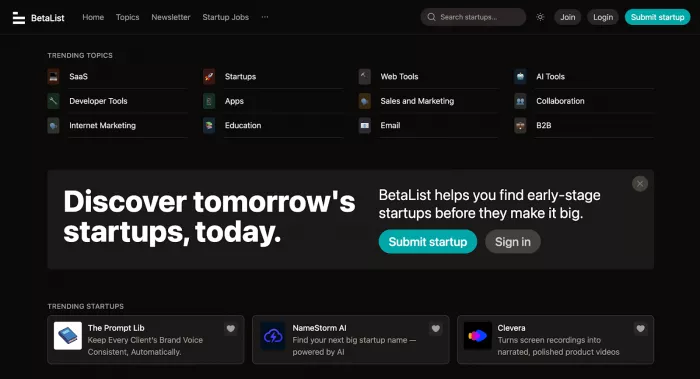
BetaList attracts early adopters and curious users. Its value lies in:
● feedback loops
● early indexing
● low-pressure exposure
It’s useful before maturity, but rarely drives meaningful revenue on its own.
Directories That Capture Intent-Driven Traffic
AlternativeTo: Where Dissatisfaction Converts
AlternativeTo attracts users actively looking to replace something that isn’t working.
That intent matters. Buyers here aren’t browsing — they’re solving a problem. Tools that position themselves clearly against known limitations often see higher-quality leads despite lower traffic volumes.
It’s one of the quieter but more effective platforms for niche SaaS.
SaaSworthy and SaaS Genius: Precision Over Popularity
These platforms win through structure, not scale.
Their filtering systems allow buyers to narrow down tools by use case, industry, and feature depth. For SaaS products that don’t compete on brand recognition, this precision can matter more than raw traffic.
Regional Platforms That Earn Local Trust
SoftwareSuggest

SoftwareSuggest has built credibility in India and surrounding markets by combining reviews with human consultation. Its audience is largely SMB-focused, and its value comes from contextual guidance rather than sheer listings.
Techimply
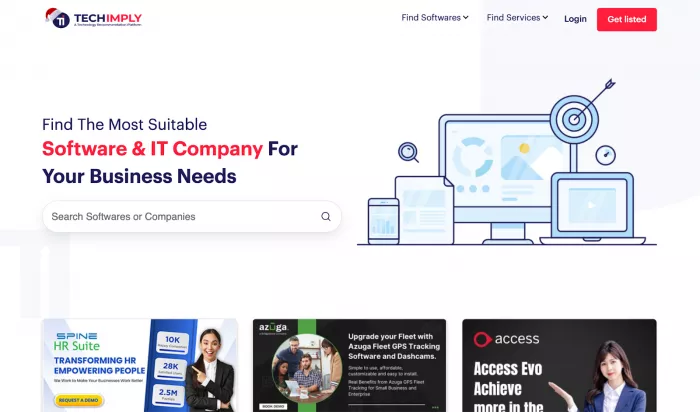
Techimply operates closer to a buyer-matching model than a traditional directory. Its growth has been driven by verified buyer intent and SEO-first discovery.
For SaaS companies targeting Asia-Pacific regions, it often outperforms global platforms in lead quality.
Deal Marketplaces and Their Actual Role
AppSumo: Validation, Not Distribution
AppSumo is often misunderstood. It’s not a sustainable growth engine — it’s a pressure test.
It trades revenue for:
● rapid feedback
● edge-case discovery
● short-term visibility
Used strategically, it can inform roadmap decisions. Used repeatedly, it can damage positioning.
Choosing the Right Platform for Your SaaS
The question isn’t where everyone lists. It’s where your buyers validate.
A practical filter:
● low-risk tools → broad discovery platforms
● high-risk tools → deep review platforms
● regional buyers → regional trust platforms
Anything beyond two or three focused channels usually dilutes effort.
Conclusion
The Most Trusted Platforms to Promote SaaS Tools aren’t loud, trendy, or new. They’re stable, boring, and reliable.
They earn trust by allowing buyers to see reality — not marketing.
And in SaaS, reality is what closes deals.

Comments