TRWho.com's reviews: Is this emerging tech section worth your time?

Trevor Hall
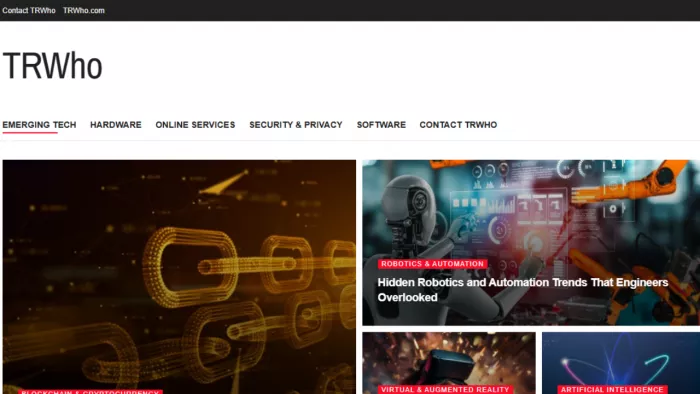
Table of Contents
- What You'll Actually Find Here
- The Real Quality Check
- Originality and Reporting: Is Anything New Here?
- Content Freshness and Update Signals
- The Author Mystery
- How It Stacks Up Against Competitors
- User Experiences: The Good and Bad
- What About Safety and Legitimacy?
- The Bottom Line: Skip It or Use It?
- The Honest Assessment
Searching for a tech blog that actually helps you understand emerging technology? You might have come across TRWho.com while browsing online. This site claims to explain complex tech topics in simple language, covering everything from AI to blockchain. But does it deliver on that promise, or is it just another content mill flooding the internet? Here's what I found after digging through the actual site and reviews.
What You'll Actually Find Here
TRWho.com positions itself as a tech news platform written by "tech enthusiasts and experts" who want to make emerging technology accessible. The emerging tech category specifically covers AI, blockchain, robotics, VR/AR, and similar topics. The site promises simple explanations for both beginners and tech professionals.
When you actually visit the emerging tech section, you'll see articles with titles like "Hidden Robotics and Automation Trends That Engineers Overlooked" and "Virtual Reality vs Augmented Reality: How They Transform Our World". The content aims to explain complicated topics without using heavy technical terms.
The Real Quality Check
Here's where things get interesting. Multiple third-party reviews describe the content as "well-researched" and "trustworthy", but there's a catch. When you compare TRWho.com to established tech publications like TechCrunch, The Verge, or Wired, the difference becomes clear.
- What works: The articles do break down complex topics into readable chunks. The language is accessible, and the site covers a decent range of emerging tech topics. For someone completely new to blockchain or AI, you'll get basic explanations that aren't buried in technical terms.
- What doesn't: The content lacks original reporting or exclusive interviews. Established tech sites like TechCrunch break news stories and conduct interviews with industry leaders. TRWho.com appears to aggregate and summarize existing information rather than producing original research or investigative journalism.
Originality and Reporting: Is Anything New Here?
Unlike established tech publications such as TechCrunch, The Verge, or Wired, TRWho.com does not produce original reporting.
There are:
- No exclusive interviews
- No investigative pieces
- No firsthand industry insights
Most content appears to summarize widely available information already published elsewhere. This places TRWho.com closer to an explainer blog than a journalism outlet.
Content Freshness and Update Signals
One notable weakness is the lack of visible publication or update timestamps across many articles.
In rapidly evolving fields like AI and blockchain, outdated explanations can mislead readers. Reputable tech platforms clearly show when content was published or last updated, signaling accuracy and relevance.
TRWho.com does not consistently provide this context, making it difficult to judge how current its information is.
The Author Mystery
One significant red flag: there's no clear information about who actually writes these articles. The site mentions a "team of tech enthusiasts and experts", but you won't find author bylines, credentials, or expert backgrounds on most articles but just one single author writing all the articles with no bio.
Compare this to legitimate tech publications where every article has a named author with verifiable credentials. This lack of transparency makes it impossible to verify the expertise behind the content.
How It Stacks Up Against Competitors
If you're looking for tech news, here's the honest comparison:
- TechCrunch: Breaks startup news, covers funding rounds, and has named journalists with industry connections
- The Verge: Detailed product reviews, video content, early access to gadgets, in-depth feature stories
- Wired: Long-form investigative pieces, cultural analysis of tech, expert contributors
- TRWho.com: Simplified explanations of existing tech concepts, no original reporting, anonymous authors
This platform isn't competing in the same league. It's more of an educational resource than a news source.
User Experiences: The Good and Bad
- Finding verified user reviews proved difficult. I searched Trustpilot, Reddit, and Google Play for actual user feedback, but it doesn't have a significant presence on review platforms. This is unusual for a site that claims to serve a "global audience".
- A few scattered reviews on other sites mention positive experiences with the "user-friendly interface" and "clear articles", but these appear on affiliate or promotional sites rather than independent review platforms.
- The concerning part: No complaints usually means either a very new site or not enough users to generate feedback. For a platform claiming to be a "trusted guide in the tech universe", the absence of verified user reviews is noteworthy.
What About Safety and Legitimacy?
Several review sites checked TRWho.com's legitimacy. One domain scanner gave it a trust score of 76%, indicating "probably not a scam but legit". The site uses HTTPS and SSL encryption, which is standard for any modern website.
However, I couldn't find information about when the domain was registered, who owns it, or where the company is based. The contact information appears limited to an email address. This lack of transparency doesn't mean it's dangerous, but it's not what you'd expect from a professional tech publication.
The Bottom Line: Skip It or Use It?
Use if: You're completely new to emerging tech topics and want very basic explanations in simple language. Think of it as a starting point for understanding concepts like blockchain or AI fundamentals.
Skip if: You want breaking tech news, in-depth analysis, product reviews from experts, or original reporting. For those needs, stick with established publications like TechCrunch, The Verge, Ars Technica, or Wired.
The Honest Assessment
It fills a niche as an educational resource for absolute beginners, but it's not a serious tech publication. The content appears to be aggregated and simplified from other sources rather than original journalism. The anonymous authorship, lack of user reviews, and minimal transparency raise questions about credibility.
If you're already reading this review, you probably have enough tech literacy to benefit more from established tech sites that offer:
- Named, credentialed authors
- Original reporting and investigations
- Verified product reviews
- Breaking news coverage
- Video content and podcasts
- Community engagement on established platforms
For casual reading about tech basics,this platform won't harm you. But for staying genuinely informed about emerging technology, your time is better spent elsewhere. The internet has plenty of content farms producing simplified tech explanations. It appears to be another one in that crowd, not a destination that offers unique value worth bookmarking.

Comments