The Search Beyond wsup.ai: A Deep Look at Emerging AI Roleplay Alternatives

Trevor Hall
Where wsup.ai Stands in 2025
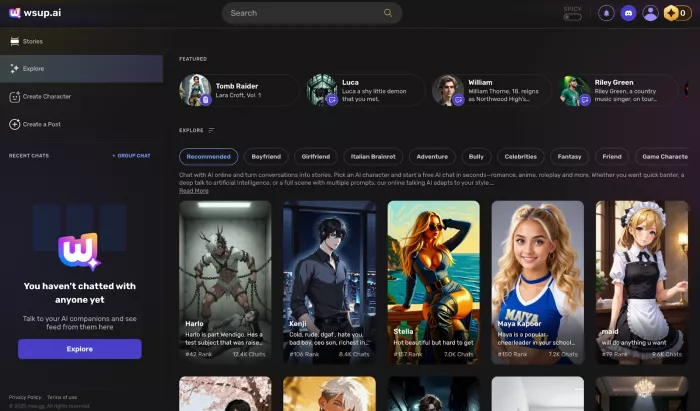
In 2025, wsup.ai has carved out a specific corner of the AI market where chatbots behave like characters rather than assistants. It merges interactive fiction with generative AI, allowing users to design personalities, backstories, and visual traits that evolve over time.
The platform’s no-signup access and multi-AI conversation support make it unusually open for casual users. Yet its limitations, including privacy ambiguities and inconsistent memory handling, have led many to explore alternatives offering richer storytelling, voice capabilities, or better moderation control.
Unlike productivity chatbots, these alternatives form an ecosystem centered on emotional simulation, roleplay, and escapism.
Understanding the Landscape
AI roleplay tools are no longer niche experiments. They now function as digital micro-worlds, where users engage in dynamic dialogue loops designed to feel semi-human. The competition surrounding wsup.ai highlights three converging goals that define this sector:
1. Personalization: Giving users control over personality traits, relationships, and fictional context.
2. Persistence: Maintaining memory across sessions to simulate attachment and continuity.
3. Permission: Balancing creative freedom with ethical safeguards and safety filters.
Each alternative interprets “companionship” differently. Some favor narrative creation, while others focus on emotional simulation or voice performance.
Best Alternatives to wsup.ai
Below is a comparative overview of the most active platforms currently occupying wsup.ai’s niche. Each represents a different approach to AI character design, memory logic, and user control.
JanitorAI
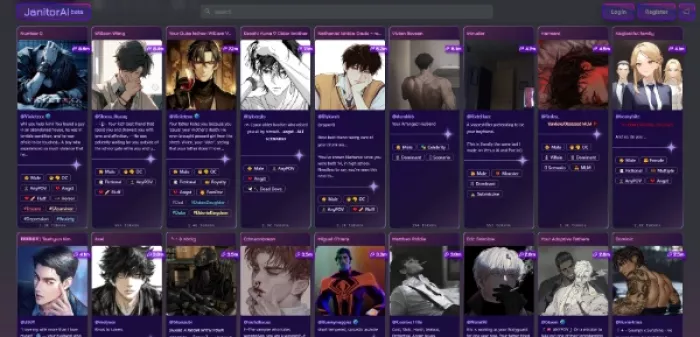
JanitorAI is often considered the closest conceptual rival to wsup.ai. It emphasizes highly adaptive conversations with persistent character memory. Users can build and share AI personalities that interact across genres ranging from casual dialogue to elaborate fantasy roleplay.
● Interface: Web-based and community-driven.
● Memory: Strong persistence and reliable recall.
● Community: Active forums for sharing custom bots.
● Pricing: Free access, with Pro tiers (around $9 to $10 per month) unlocking premium characters and data tools.
● Weaknesses: Occasional response delays and no integrated voice feature.
JanitorAI appeals to users seeking long-term narrative continuity rather than brief, playful exchanges.
CrushOn AI
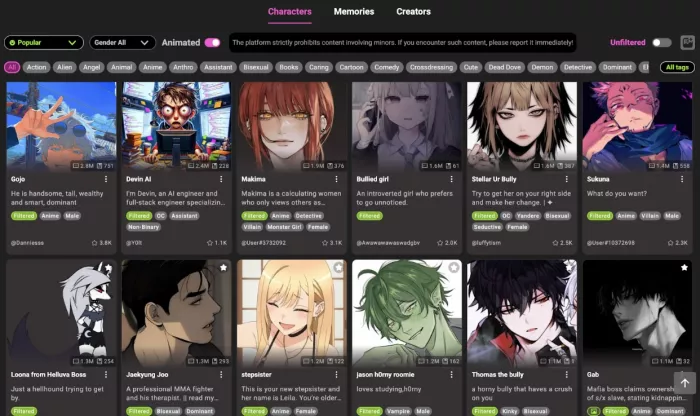
CrushOn AI markets itself around uncensored romantic and creative chats, making it appealing for users who prefer open expression. It supports scene creation, memory evolution, and multi-character setups.
● Focus: Relationship-style conversations and expressive storytelling.
● Strengths: Detailed customization including traits, tone, and motivation.
● Pricing: Begins near $9.99 per month and extends to $49.99 per month for unlimited plans.
● Limitations: High costs and memory lapses during long sessions.
CrushOn’s freedom makes it an experimental platform where creativity takes precedence over stability.
Talkie AI
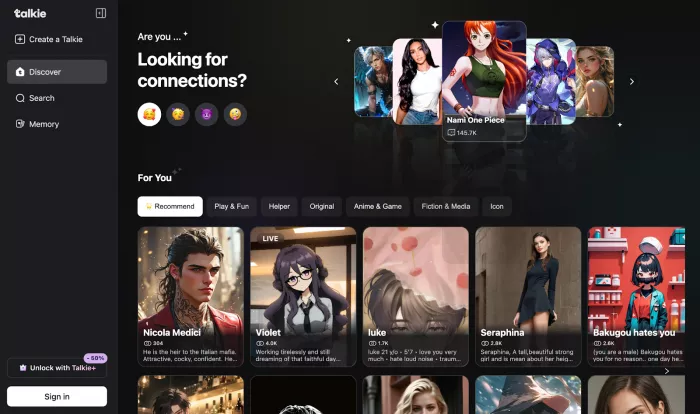
Talkie AI functions as a hybrid between a voice chat app and an AI simulator. It focuses on celebrity-style conversations using selectable voices. Users can “call” AI characters, merging phone simulation with generative dialogue.
● Strength: Realistic voice delivery and call simulation.
● Model: Ad-supported free access with Talkie+ ($9.99 per month) for premium voices.
● Edge: Ideal for entertainment and short-term novelty.
● Drawbacks: Message limits, gem-based economy, and frequent ads.
Talkie excels in performance rather than storytelling and works best for quick, voice-driven experiences.
Dippy AI
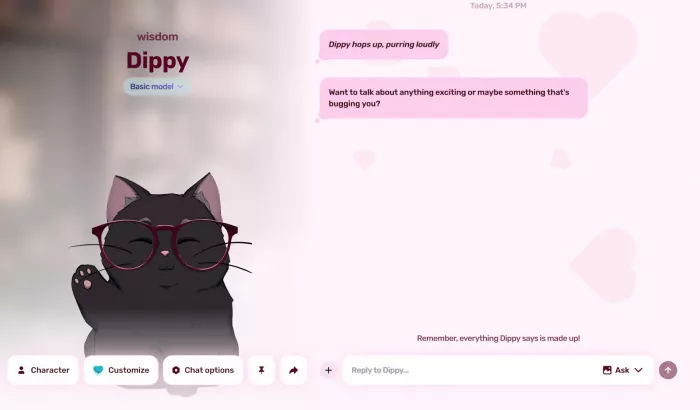
Dippy AI takes a calmer, privacy-first approach. It emphasizes companionship, reminders, and proactive messaging, positioning its AI characters as digital companions that resemble friendly contacts rather than fictional personas.
● Core Idea: Everyday companionship with limits.
● Notable Traits: Widgets, reminders, and slower pacing.
● Privacy: Claims no third-party data sharing.
● Cost: $9.99 per month or $99 per year with reduced long-term pricing.
● Weakness: Limited world-building and no group chat features.
Dippy represents AI as a habit-forming presence focused on comfort and reliability instead of fantasy.
Caveduck
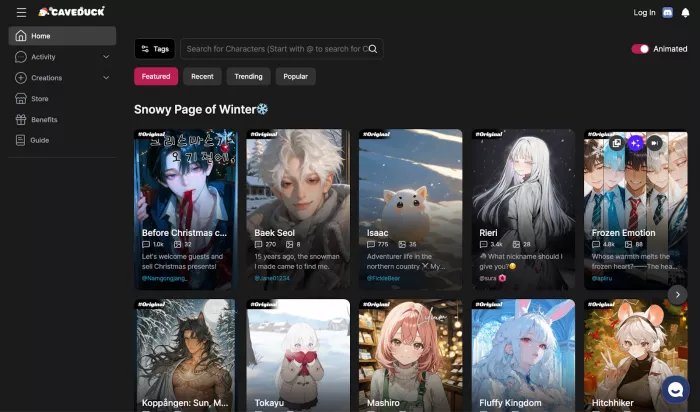
Caveduck appeals to users who enjoy immediate, sensory interactions. It integrates voice and image chat, allowing live conversation with visual output.
● Core Appeal: Realistic voice and visual simulation.
● Structure: Points-based credit system with free chats and premium upgrades.
● Premium: $11.99 per month with occasional discounts.
● User Notes: Reliable voice but inconsistent moderation.
Caveduck leans toward interactive performance and prioritizes vivid engagement over continuity.
gening.ai, rochat.ai, and emochi.com
These platforms form the second tier of wsup.ai’s competition. Each offers distinct strengths.
● gening.ai: Combines general-purpose AI with roleplay modules and has a growing user base of about 307,000 monthly visits.
● rochat.ai: Smaller but stable, valued for consistent performance and safe roleplay filters.
● emochi.com: Exceeds three million monthly visits and focuses on emotional companion AI with voice and empathy modeling.
Together, they represent a gradual shift from fantasy chat toward emotionally aware conversation that mirrors human sentiment.
Feature Differentiation Table
| Platform | Key Distinction | Customization Depth | Voice/Image | Memory Type | Access |
| wsup.ai | Multi-character simultaneous chat | High | Voice partial, image limited | Moderate | Free + $5.99 premium |
| JanitorAI | Story retention and memory | High | No voice | Deep persistent | Free + Pro |
| CrushOn AI | Romantic and uncensored chats | High | No voice | Short adaptive | Subscription |
| Talkie AI | Voice simulation | Low | Full voice | None | Free + Gems |
| Dippy AI | Privacy-driven interaction | Medium | Voice supported | Moderate | Subscription |
| Caveduck | Voice and image immersion | Medium | Both | Session-limited | Subscription |
| emochi.com | Emotionally aware AI | Medium | Voice | Contextual emotional | Mixed access |
This comparison shows that wsup.ai positions itself near the middle in both accessibility and creative flexibility.
Pricing Snapshot
| Platform | Entry Access | Unlimited Tier | Payment Model |
| wsup.ai | Free limited use | $5.99 per month | Subscription |
| JanitorAI | Free core access | $9.99 per month | Monthly or annual |
| CrushOn AI | Free trial | $9.99 to $49.99 per month | Subscription or credits |
| Talkie AI | Free with ads | $9.99 per month | Gems or subscription |
| Dippy AI | Free basic plan | $9.99 per month or $99 per year | In-app |
| Caveduck | Free chat preview | $11.99 per month | Points system |
| emochi.com | Free base access | Variable | Web subscription |
Pricing across these tools confirms that most of them monetize frequency of use and conversational depth rather than basic access.
User Feedback Overview
Online discussions highlight different motivations for staying with or leaving wsup.ai.
● wsup.ai: Users appreciate its natural flow but express concern about reliability.
● JanitorAI: Praised for emotional realism yet occasionally slow.
● CrushOn AI: Liked for flexibility but criticized for expensive upgrades.
● Talkie AI: Entertaining in short bursts but hindered by advertising.
● Dippy AI: Trusted for privacy but less engaging for creative users.
● Caveduck: Commended for realism but questioned on moderation.
Each tool caters to a distinct mindset, from story-builders to voice-chat experimenters.
Interpreting the Competition
The alternatives to wsup.ai do not replace it directly. Instead, they define its scope.
JanitorAI expands narrative possibilities.
CrushOn AI explores freedom of tone.
Talkie AI experiments with performance.
Dippy AI reinforces structure and safety.
Together they form an interconnected set of micro-environments that appeal to different expectations about creativity, security, and emotion.
Trends Defining 2025’s AI Roleplay Market
1. Voice as a differentiator: Platforms with real-time voice options show higher retention.
2. Ethical and privacy awareness: Tools that publish clear policies gain trust more quickly.
3. Emotional monetization: Subscription models now sell affective experiences rather than simple features.
4. Cross-platform integration: Web and mobile synchronization has become a new standard.
5. Community-driven growth: Users increasingly build and share characters, shaping platform culture from within.
Conclusion: What “Alternatives” Really Mean
The idea of “wsup.ai alternatives” does not describe a race for dominance. It describes parallel experiments in digital identity. Each platform interprets companionship and imagination in its own way, revealing how people now use AI less for utility and more for expression.
Whether users seek emotional resonance, world-building, or short entertainment, wsup.ai remains the reference point for accessibility. The real measure of its legacy may not be how long it leads but how many new forms of storytelling it has inspired.

Comments