The Best Chub Venus AI Alternatives for Roleplay and Character Chat

Trevor Hall

Understanding the Chub Venus AI Framework
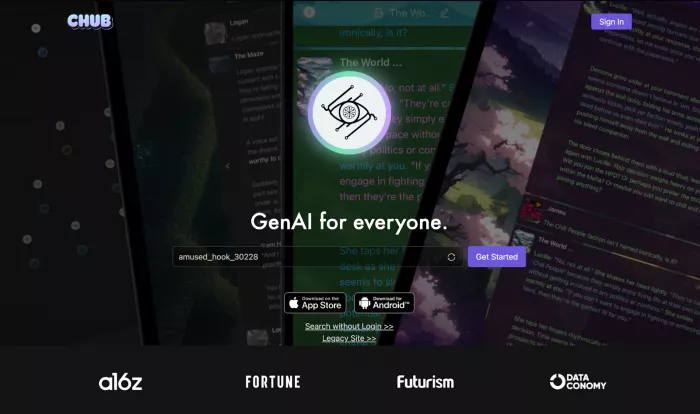
Before exploring alternatives, it helps to understand what users are moving away from. Chub Venus AI, often called the “Venus frontend,” was designed as an experimental layer of the Chub.ai ecosystem, focusing on creating and interacting with AI-driven characters. It integrated lorebooks, macros, and context-aware dialogue trees, allowing people to simulate long-form, emotional, and often uncensored conversations.
Its strength lay in freedom and customization, not polish. Every user could link their own API keys, adjust personality depth, and build characters that behaved consistently through memory persistence. Yet that flexibility came at a cost. The site suffered server downtime, update inconsistencies, and performance throttles, especially for those without paid APIs.
As of early 2025, Venus Chub AI’s main servers remain under migration, leaving its community in limbo. For many, this downtime has been a catalyst to explore alternatives that retain creative depth but reduce friction and instability.
Best Alternatives to Chub Venus AI
1. JanitorAI

JanitorAI represents the closest match to Chub Venus in both philosophy and functionality. It supports user-created characters, uncensored interactions, and API integration for advanced models such as GPT or Claude.
Where JanitorAI differs is in its operational efficiency. Its infrastructure is built for fast response times, even during high traffic periods, and its web interface is more stable. Users have praised the searchable character library and the option to toggle between SFW and NSFW modes, allowing for better content control.
However, JanitorAI is not without limits. Free access is possible, but heavy users often encounter queues or message restrictions. Reddit discussions suggest that premium plans—hovering around $10 per month—offer consistent performance. The biggest distinction is usability: Chub demands configuration literacy, while JanitorAI runs smoothly out of the box. It’s the more practical, less experimental successor.
2. CrushOn AI

If Chub Venus was a sandbox for experimentation, CrushOn AI is its polished cousin. The platform emphasizes long-term memory, multiple personas, and fast message turnaround, making it ideal for continuous storytelling or romantic-style roleplay.
Unlike Chub Venus, which requires manual API setup, CrushOn AI operates entirely in-browser with ready-to-use characters. It supports uncensored interactions, though within self-regulated boundaries, and employs higher-end models like Claude 3.5 and GPT-4 to maintain character consistency.
Users switching from Venus often describe CrushOn as stable but less flexible. It lacks Chub’s granular prompt controls and group chat structure, but in exchange, offers reliability and a clean design. For users frustrated by downtime or lost conversations, CrushOn is often the first stop after leaving Chub.
3. SpicyChat.ai

Where CrushOn polishes, SpicyChat.ai immerses. It’s known for natural emotional exchanges, responsive characters, and a conversational rhythm that feels less mechanical than most alternatives.
The key differentiator here is tone. SpicyChat’s characters exhibit initiative, taking the lead in dialogue rather than waiting for prompts. This allows for smoother roleplay that feels closer to spontaneous storytelling. Its unfiltered mode supports NSFW content but prioritizes realism and emotional nuance over shock value.
Users mention a few design quirks: repetitive imagery and limited physical customization compared to Chub’s modular tools. Still, for those who value fluid conversation and atmosphere more than technical precision, SpicyChat delivers one of the most immersive unfiltered experiences available.
4. PygmalionAI

PygmalionAI occupies a unique space between open-source freedom and community moderation. It’s often described as the “grassroots” alternative—built by developers and enthusiasts who wanted to preserve AI character roleplay without corporate interference.
Its interface is minimalistic, focusing purely on text-based dialogue. There are no queues, subscriptions, or feature locks, which makes it appealing for users seeking a lightweight experience. Characters can be customized using Pygmalion’s open character cards, and users are free to share or modify these creations across different forums.
What Pygmalion lacks in polish it compensates for in transparency. Every setting is user-facing, and the system can be integrated with other interfaces such as SillyTavern or TavernAI. It’s less about convenience and more about ownership—a quality Chub’s community appreciates deeply.
5. Candy.ai

While not a direct peer to Venus in technical structure, Candy.ai deserves mention for users drawn to the more visual or NSFW-oriented side of AI companionship. The platform merges chat simulation with image generation, allowing users to see the characters they’re speaking with.
Its conversational depth is limited, but its visual realism is strong. Some users report a tendency for the AI to drift toward repetitive or overly erotic exchanges, which may alienate those seeking balance between narrative and fantasy.
Candy.ai is subscription-based, with monthly pricing similar to CrushOn’s, and its main appeal lies in aesthetic presentation rather than world-building. It’s better suited for visual engagement than narrative immersion.
6. Agnai.chat

For users who value control and privacy over all else, Agnai.chat is a viable option. Unlike cloud-based systems, Agnai supports self-hosting, allowing individuals to manage data, models, and moderation on their own terms.
The tool is intentionally stripped down, offering only what’s essential for conversation. It lacks the massive libraries of JanitorAI or CrushOn, but for advanced users who prefer running local models, Agnai offers a sense of security that Chub Venus never could.
It appeals particularly to those who use AI for writing or experimentation rather than social engagement. The tradeoff is obvious: freedom in exchange for setup complexity.
7. NovelAI

Though not built primarily for chat, NovelAI remains a reliable narrative generation platform for those who came to Chub Venus for its storytelling potential. It supports story memory, character sheets, and detailed world-building, producing prose that can rival human writing.
Unlike conversational tools, NovelAI doesn’t simulate emotional back-and-forth; instead, it creates structured narrative output. This makes it ideal for writers, roleplayers, or developers who prefer text generation without the unpredictability of live chat systems.
Subscription costs range from moderate to high, depending on token usage, but its stability and quality of generated writing have made it a cornerstone among AI fiction enthusiasts.
Evolving User Needs and Shifting Priorities
Venus Chub AI’s influence is undeniable. It helped popularize the idea of modular AI roleplay—a user-led ecosystem where anyone could shape the behavior and memory of digital characters. Yet its absence, even temporary, revealed something larger: the fragility of platforms that rely on decentralization without clear infrastructure.
Users migrating to new tools are not just chasing uptime. They’re responding to fatigue—technical errors, broken prompts, throttled sessions, and fragmented communities. The success of tools like JanitorAI and CrushOn underscores a growing desire for stability over boundless freedom. The next phase of this niche won’t necessarily belong to the most unfiltered system, but to the one that balances expression with reliability.
Conclusion
Chub Venus AI still represents an important chapter in the evolution of AI character interaction. It proved that users want more than scripted bots—they want living systems that remember, adapt, and respond without moral filters. But the same openness that made Venus exciting also made it fragile.
The current landscape reflects a recalibration. Developers are no longer asking how to remove limits; they’re asking how to make freedom sustainable. Each of the alternatives listed here tackles that question differently: JanitorAI with structure, CrushOn with polish, Pygmalion with transparency, and Agnai with autonomy.
Choosing between them isn’t about replacing Venus—it’s about deciding which vision of AI interaction feels worth building on. Some users will chase emotion, others control, and others simply consistency. But all share a lesson learned from Venus Chub’s rise and pause: in an ecosystem built on creativity, stability is no longer optional.

Comments