Meta to Acquire Chinese-Founded AI Startup Manus to Strengthen Advanced AI Capabilities

Trevor Hall
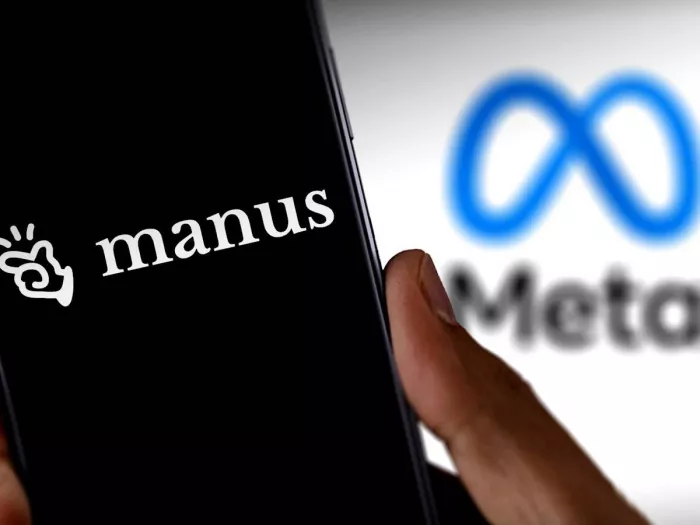
In a move that underscores its ambitions in the rapidly intensifying artificial intelligence race, Meta Platforms Inc. is set to acquire Manus, a Chinese-founded AI startup known for its pioneering work in multimodal intelligence and data-efficient machine learning. The acquisition, reportedly valued at over $300 million, is aimed at bolstering Meta’s research and product development in next-generation AI systems.
Founded in 2018 by former Tsinghua University researchers, Manus gained recognition for its innovative AI architectures that merge text, visual, and sensory data streams, allowing machines to interpret the world in a more human-like manner. Over the past two years, the company’s breakthroughs in efficient model training attracted global attention, including interest from major U.S. tech firms seeking to enhance their own generative AI technologies.
A Meta spokesperson confirmed the forthcoming deal, stating that integrating Manus’s proprietary frameworks will “accelerate the development of Meta’s long-term AI models designed for open collaboration and scaled intelligence.” While the terms of the acquisition remain undisclosed, insiders suggest the transaction could close in the first quarter of 2026, following necessary regulatory reviews in both the United States and Singapore, where Manus currently operates its global headquarters.
Global AI Race Intensifies
Meta’s acquisition aligns with its ongoing strategy to expand beyond social networking and solidify its position as a frontrunner in AI innovation, an arena currently dominated by OpenAI, Google DeepMind, and Anthropic. In 2024, Meta launched its open-weight Llama 3 model family, which gained wide adoption among independent AI developers. However, according to analysts, Manus’s technology could give Meta a new edge in building adaptive multimodal systems capable of contextual reasoning and real-time environment understanding—key features for integrating AI into augmented reality (AR) and virtual reality (VR) experiences.
Industry experts say this acquisition reflects Meta CEO Mark Zuckerberg’s focus on embedding AI deeply into every Meta product, from Instagram’s recommendation engine to Horizon’s AR interfaces. “Manus provides Meta with the missing link between vision and reasoning,” said Daniel Lu, a Beijing-based AI analyst. “Their models can process video, speech, and sensor data with far less computational power, something Meta’s AI division has been pursuing for years.”
Regulatory and Strategic Implications
The deal also signals a rare case of a Chinese-founded AI firm being integrated into a major Western tech ecosystem. Amid tightening U.S.-China technology relations, Manus’s Singapore-based structure is believed to have smoothed the acquisition process. Still, regulatory approval could face scrutiny regarding data sovereignty and technology transfer policies.
If completed, the acquisition will mark Meta’s most significant AI-related purchase since its 2014 acquisition of the U.K.-based DeepFace team. Analysts say Manus’s integration could help Meta accelerate work on human-like AI agents for its metaverse and business AI initiatives, including tools for creators, advertisers, and developers.
Meta declined to comment on specific integration plans but emphasized its commitment to “building transparent, open models that benefit the entire ecosystem.” For the AI community, Meta’s move may foreshadow a new wave of cross-border collaborations, where innovation, not geography, defines leadership in artificial intelligence.

Comments