How “Jilo Viral” Became the Internet’s Quiet Obsession

Shubham Sharma
The Noise Before the Name
Every few months, a new corner of the internet suddenly fills with the same phrase. It appears in short videos, captions, and search bars. That’s how “Jilo Viral” began spreading: not as a product launch, but as a whisper wrapped in curiosity.
At first, it sounded like a joke, a name without context. Then it turned out to point somewhere real, a streaming site promising movies without payment or registration. What started as a tag evolved into an informal digital event, where millions looked for the same loophole at the same time.
Curiosity as Infrastructure
The growth of Jilo Viral doesn’t depend on advertising or branding. It relies on collective curiosity. Each person who searches the term becomes part of a distribution network, passing traffic along to a system that profits from attention itself.
No one needed to design a marketing campaign. The algorithm handled it. Once enough people mentioned it on TikTok and Facebook, search engines began prioritizing it. The loop fed itself: visibility created legitimacy, legitimacy created clicks.
This dynamic shows how modern piracy hides inside normal browsing habits. People aren’t necessarily looking for illegal content; they’re following curiosity trails optimized by the platforms they already use.
Blurred Boundaries, Faded Accountability

What makes Jilo Viral interesting is how little effort it takes to appear legitimate. A familiar interface, an HD label, and a few generic menus are enough to create the illusion of a service.
Behind that design lies a rotating cast of mirror sites that vanish and reappear under new addresses. Ownership information is hidden. No contact forms, no disclaimers, no policies. It’s not built to last; it’s built to replicate.
Each clone inherits the search visibility of the last one. In practice, there is no single Jilo Viral — only a moving target sustained by algorithms and audience behavior.
The Gray Comfort of Risk
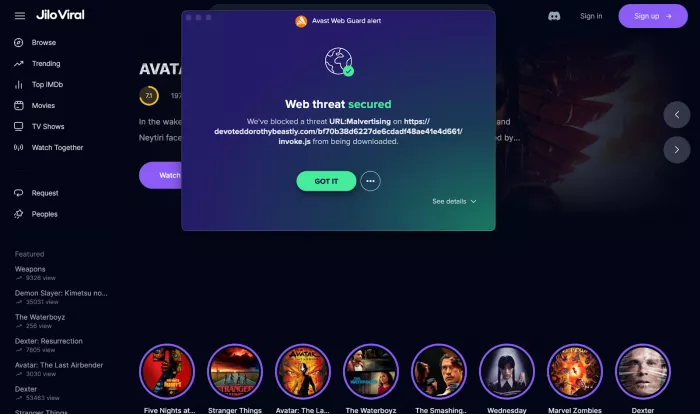
People who use these sites often know what they’re doing. The warnings about malware and piracy are not secrets. Yet the same users continue returning, which raises a harder question: why does risk feel acceptable here?
Part of the answer is economic. Paid platforms fragment access to content across dozens of subscriptions. But part of it is emotional. Free streaming feels like reclaiming control from systems that dictate when and where stories can be watched.
Jilo Viral offers an illusion of autonomy — a sense that the viewer, not the corporation, decides the rules. That illusion survives even when users encounter pop-ups, redirects, or fake download prompts.
Memes, Morality, and the Disappearing Line
On social platforms, Jilo Viral is often mentioned with irony. People share screenshots half-seriously, as if participating in a game everyone understands but no one admits. The act of sharing itself blurs intent: is it a recommendation or a joke?
Through repetition, the term loses its association with infringement and becomes a kind of cultural shorthand for “something free but probably sketchy.” This ambiguity is why it spreads faster than formal warnings ever could.
What begins as piracy ends up functioning as a meme about piracy, stripping away the moral weight that once accompanied it.
An Ecosystem of Disposability
Most piracy hubs fade quietly once they’re blocked or lose relevance. Jilo Viral’s endurance lies in its disposability. Each domain is a placeholder, not a brand.
This constant regeneration mirrors how online audiences treat content itself — fleeting, interchangeable, temporary. The same traits that make a meme viral make piracy platforms resilient. Deletion isn’t destruction; it’s only a delay before replication.
In this sense, Jilo Viral is less a website than a behavior pattern, reproduced by users every time they search, share, or click without asking where a file originates.
What the Trend Reveals
Studying Jilo Viral means studying a broader digital reality: the erosion of boundaries between legality, culture, and convenience. When so many users encounter the same gray-market sites through mainstream apps, piracy no longer looks like rebellion. It looks like routine.
The platform itself matters less than the conditions that made it possible — cost barriers, licensing walls, and global asymmetry in media access. Until those conditions shift, similar sites will keep emerging, each inheriting the same audience habits and the same risks.
After the Click
For most visitors, a Jilo Viral session ends uneventfully. They watch a film, close the tab, move on. But each visit strengthens an ecosystem that thrives on invisibility. Advertising networks collect impressions. Data brokers build profiles. Clone domains prepare to replace the current one.
The system doesn’t need loyalty, only repetition. As long as people keep looking for free entertainment, it will continue reproducing itself under new names.
Safer Alternatives
Legal Free Streaming Platforms (Ad-Supported)
1. Tubi: A fully legal, ad-supported streaming platform with a broad selection of movies, TV series, and anime. Its catalog includes licensed content from well-known studios such as Paramount, MGM, and NBCUniversal, making it one of the strongest free options available.

2. Pluto TV: Offers a mix of live, channel-based programming and on-demand movies and shows. The experience is similar to traditional cable TV but delivered entirely online at no cost, supported by ads.

Paid, Fully Licensed Streaming Services
1.Netflix: A leading global streaming platform known for its extensive library of original series, films, and documentaries. It offers reliable apps across nearly all devices and regions.

2. Amazon Prime Video: Combines a large included streaming library with the option to rent or buy additional titles. It’s often considered high value when bundled with Amazon Prime benefits like fast shipping.
The Quiet Lesson
Jilo Viral isn’t exceptional because it breaks laws; thousands of sites do that. It’s exceptional because it reveals how platform-driven behavior normalizes the gray zone.
Every search, every casual share, contributes to a network that outpaces regulation. The story here isn’t about one website disappearing; it’s about how easily another will appear tomorrow.
In that continuity lies the true viral mechanism. A cycle of curiosity, imitation, and forgetfulness that turns piracy into habit rather than choice.

Comments