The End of "Plastic" Content: Why Humanize.io is Redefining Digital Trust in 2026

Parveen Verma

Beyond Detection: How to Effectively Humanize AI Content for Better SEO and Readability in 2026
We’ve officially hit "Peak AI." In 2026, the internet is flooded with millions of pages of synthetic text that look identical. For businesses and creators, this has created a massive liability: Digital Friction. When a reader—or a search engine algorithm—senses that a piece of content is purely machine-generated, trust evaporates instantly.
To combat this, the industry's most successful players are pivoting toward a "Human-First" AI strategy. It’s no longer about generating more words; it’s about ensuring those words have a soul. This is where Humanize.io has stepped in as the gold standard for high-stakes digital publishing.
The Hidden Cost of AI Detection
Running a high-volume SEO strategy with raw AI output is like building a skyscraper on sand. Sophisticated tools like GPTZero and Originality.ai are now the gatekeepers of search visibility. If your content is flagged, your organic reach doesn't just dip—it risks total suppression.
The secret to bypassing these "forensic" linguistic checks isn't just changing a few adjectives. It requires a fundamental re-engineering of the text's flow. You must humanize ai outputs by injecting the subtle irregularities, emotional nuance, and varied syntax that define genuine human communication.
Why Humanize.io is the Industry Benchmark
While basic paraphrasers often strip away the meaning of a sentence, Humanize.io uses a context-aware refinement engine. It’s designed to humanize ai text while preserving the expert-level insights and factual accuracy of the original draft.
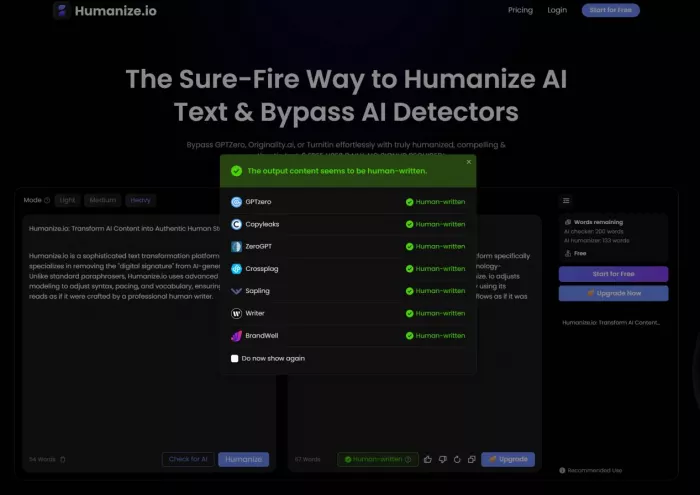
- Multi-Layered "Cloaking": Humanize.io doesn't just aim to pass one detector; it is optimized to be indistinguishable across the entire spectrum of AI surveillance tools.
- Preserving Brand Voice: Whether you need a punchy op-ed or a technical white paper, the platform allows for granular control over the final output’s tone. It ensures your "humanized" content still sounds like you.
- Future-Proofing SEO: As Google continues to prioritize "Experience, Expertise, Authoritativeness, and Trustworthiness" , using Humanize.io becomes a critical step in verifying that your content meets the highest standards of digital authenticity.
How to Use Humanize.io for Best Results:
Step 1: Paste your AI-generated draft into the interface.
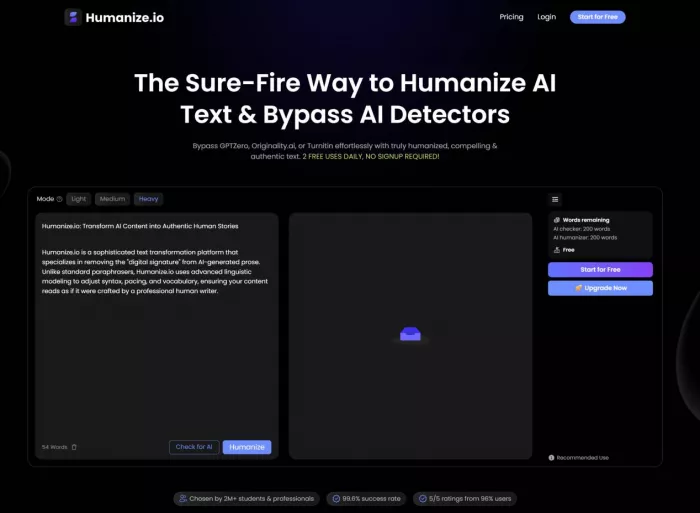
Step 2: Select the "Humanize" mode to trigger the advanced linguistic engine.
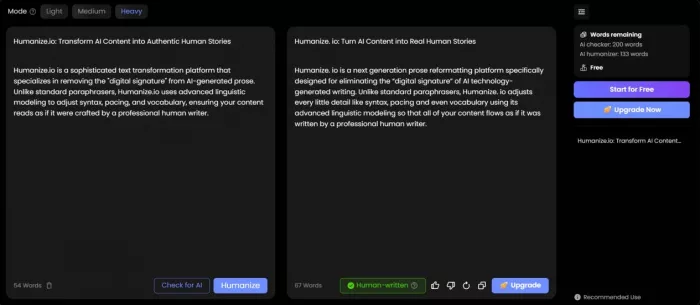
Step 3: Review the output. You’ll notice the "robotic" patterns are gone, replaced by a more natural, engaging tone that preserves your original intent.
Conclusion
In an era of infinite synthetic noise, the most valuable commodity is authenticity. By using Humanize.io to humanize ai content, you aren't just "beating the bots"—you’re building a long-term bridge of trust with your audience. In 2026, the brands that win will be the ones that master the art of being human at scale.

Comments