Elon Musk Sees a World Full of Humanoid Robots. China Is Already Building It

Trevor Hall
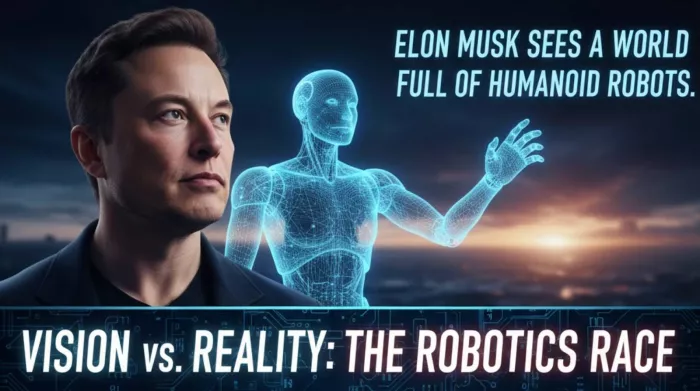
When Elon Musk talks about the future, he rarely thinks small. In recent remarks, the Tesla chief executive described a world where humanoid robots perform most physical labor, making traditional jobs optional and unlocking what he calls “universal high income.”
But while Musk sketches out that future, China is moving faster to turn it into reality.
Across factories, warehouses, and public venues, Chinese-made humanoid robots are already being deployed in pilot programs, supported by government funding and a manufacturing ecosystem built for speed and scale. The contrast highlights a growing gap between vision and execution in the global race for robotics leadership.
A future Musk says will redefine work
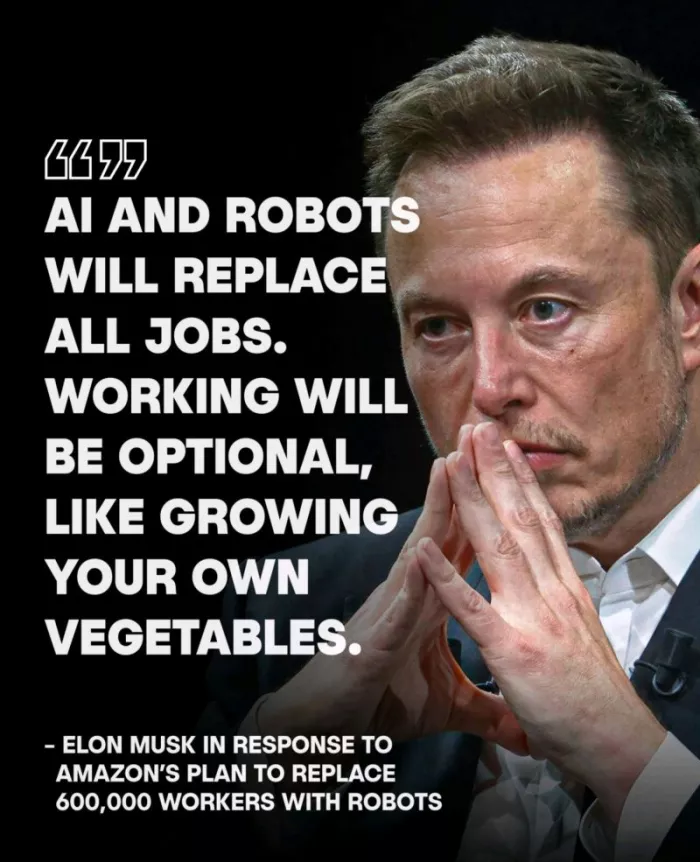
Musk has repeatedly argued that robots like **Tesla’s Optimus could become the most valuable product ever created. He predicts tens of billions of humanoid robots eventually working in factories, homes, hospitals, and care facilities.
According to Musk, the logic is straightforward. Once robots can handle physical labor at scale, productivity explodes, costs collapse, and scarcity fades. In that scenario, human work becomes optional rather than essential.
Yet for now, Optimus remains largely confined to controlled demonstrations and internal factory pilots. Tesla has acknowledged production challenges, including dexterity issues, battery constraints, and slow assembly timelines. As of late 2025, only hundreds of units have been built, well short of earlier targets.
China’s quieter, faster approach
While Tesla refines prototypes, China has taken a different path. Instead of relying on a single flagship project, it has encouraged dozens of robotics firms to commercialize early and iterate in the real world.
Companies such as Unitree, UBTech, Fourier, XPeng Robotics, and Agibot have already delivered humanoid robots to factories, retail spaces, and public events. Some models are priced under $15,000, dramatically lowering the barrier to adoption.
Chinese manufacturers produced more than 1,000 humanoid robots in 2025, according to industry estimates, with output rising each quarter. These robots are not perfect, but they are learning on the job.
Why China is moving ahead
China’s advantage is not a single breakthrough but a systemic push.
Beijing has made humanoid robotics a strategic priority, rolling out subsidies, national standards, test zones, and procurement programs. Local governments are funding pilot deployments, while state-backed capital supports startups across the supply chain.
This approach mirrors China’s earlier success in electric vehicles and solar manufacturing, where early losses were tolerated in exchange for long-term dominance.
| Factor | United States | China |
| Deployment stage | Prototype and pilot | Early commercial rollout |
| Production scale | Hundreds of units | 1,000+ units in 2025 |
| Cost advantage | Limited | Strong |
| Policy support | Market-driven | Government-backed |
Technology gaps remain on both sides
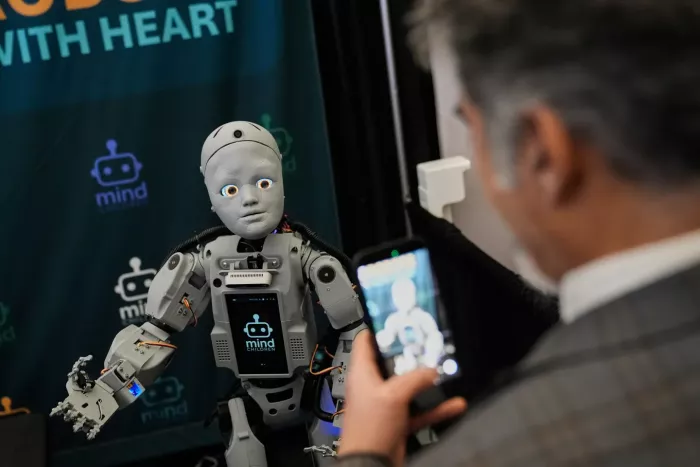
Despite rapid progress, humanoid robots are still far from replacing human workers wholesale. Battery life remains limited, fine motor skills are inconsistent, and reliability in unpredictable environments is unproven.
Even China’s most advanced robots are best suited to structured tasks, not open-ended human labor. Tesla, meanwhile, may retain an edge in long-term AI software integration if it resolves its hardware bottlenecks.
Experts caution that the race is not yet settled. Scaling robots from factory demos to everyday life requires safety standards, regulatory clarity, and sustained demand.
A race defined by timing, not just technology
Musk’s vision places humanoid robots at the center of a transformed global economy. China’s strategy focuses less on grand promises and more on early presence.
If current trends continue, China may dominate the first generation of commercially deployed humanoid robots, even as U.S. companies work toward more advanced systems. The outcome may shape not just who builds the robots, but who sets the rules for how they are used.
For now, the future Musk imagines is visible in pieces. In China, some of those pieces are already on the factory floor.

Comments