CloudElder.com Review (2026): Is It Legit, Safe, or a Scam?

Rajat Chauhan
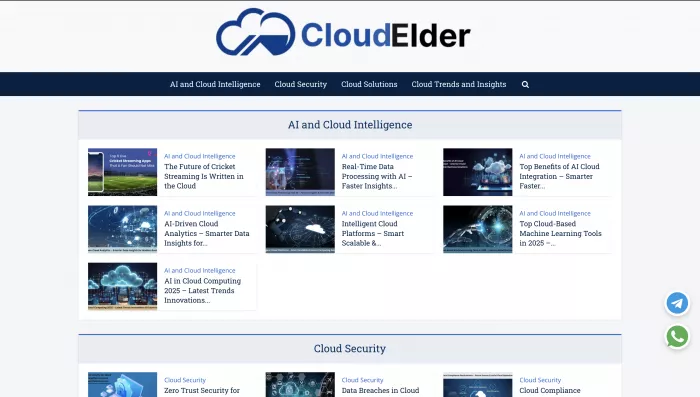
If you are searching for CloudElder.com, you likely fall into one of two camps: you stumbled upon their content while researching cloud computing and want to know if it's reliable, or you saw the brand name somewhere and are wondering whether this is a legitimate company or just another content farm.
You are right to ask.
The Short Answer: CloudElder.com is a legitimate digital publisher — not a scam, not a cloud service provider, and not a security threat. It is a news and educational blog that provides beginner-friendly explanations of cloud technology. However, "legitimate" and "authoritative" are not the same thing. CloudElder suffers from significant transparency issues regarding author credentials and ownership, and should not be used as a primary source for professional certification study or enterprise-level decision-making.
What Is CloudElder.com?
CloudElder is not a cloud hosting provider, infrastructure platform, or software vendor. You cannot purchase cloud storage, server space, or any service here.
CloudElder.com is an informational content website that publishes articles about cloud computing concepts, technology trends, digital tools, and industry news. It monetizes through display advertising and paid guest post placements. The platform targets readers who need simplified explanations without jargon, positioning itself as a bridge between dense technical documentation and mainstream tech journalism.
| Detail | Information |
|---|---|
| Official Domain | cloudelder.com |
| Entity Type | Digital content publisher / tech blog |
| Primary Audience | Beginners, non-technical professionals, small business owners |
| Core Value | "Plain English" cloud computing explanations |
| Cost | Completely free, no registration required |
| Domain Rating | 26 out of 100 (low-to-medium authority) |
| Monthly Traffic | Approximately 14,950 organic visits |
| Certifications Offered | None |
| Cloud Services Sold | None |
Clone Domain Warning
Multiple domains using the CloudElder name exist. The official site is cloudelder.com. Variant domains including cloudelder.net, cloudelder.org, and cloudeldercom.com may not be associated with the primary platform. Verify you are on the .com domain before relying on any content.
Is CloudElder.com Safe?
Two separate concerns need addressing: device safety and content trustworthiness.
Technical Safety
From a cybersecurity perspective, CloudElder.com is safe to visit. The site uses valid SSL/HTTPS encryption, shows no malware or phishing indicators, requires no account creation or payment, and publishes a privacy policy. You will not compromise your device, data, or finances by browsing.
Content Trustworthiness
This is where the picture gets complicated. Third-party review platforms consistently assign CloudElder a "medium" trust score — not flagged as dangerous, but missing the transparency signals that establish genuine authority.
Present: Professional design, regular updates, SSL encryption, privacy policy, some backlink authority (DR 26), no evidence of fraud.
Missing:
| Transparency Factor | CloudElder | Industry Standard |
|---|---|---|
| Ownership disclosure | Not public | Should be visible |
| Author credentials | Not displayed | Should show expertise |
| Editorial/fact-checking policy | Not published | Should be documented |
| Company founding date | Not disclosed | Should be available |
| Physical address | Not listed | Should be stated |
| Contact phone/team email | Not visible | Should be accessible |
| About page with team info | Missing | Should exist |
What this means for you: CloudElder is not trying to steal your money or infect your computer. The concern is whether you can rely on the accuracy and expertise behind their content. The answer is: with caution. Use CloudElder for initial understanding, then verify anything important with authoritative sources.
Content Quality Review
Writing Style: Genuinely Accessible
This is CloudElder's real strength. The writing is jargon-free, beginner-friendly, scannable, and time-efficient. If you find AWS documentation intimidating, CloudElder's simplified approach has genuine value as a starting point.
Technical Depth: Shallow
This is CloudElder's real weakness. Content stays at the conceptual level:
| Content Element | CloudElder | What Professionals Need |
|---|---|---|
| Concept definitions | Yes | Yes |
| Trend summaries | Yes | Yes |
| Implementation steps | No | Yes |
| Code examples | No | Yes |
| Architecture diagrams | No | Yes |
| Hands-on labs | No | Yes |
| Real-world case studies | Rare | Yes |
| Certification alignment | No | Yes |
You will learn what hybrid cloud means on CloudElder. You will not learn how to architect one.
Author Credentials: The Biggest Problem
Articles carry author names but no biographical information, professional credentials, certifications, industry experience, LinkedIn profiles, or portfolio links. Guest posts (paid contributions) appear alongside staff content with no clear distinction.
| Platform | Author Attribution |
|---|---|
| CloudElder | Name only, no credentials visible |
| TechTarget | Full bio, title, expertise areas, verified journalists |
| AWS Blog | Name, role, certifications, employee verification |
| DigitalOcean | Bio, GitHub profile, expertise area, vetted contributors |
| TechCrunch | Full bio, publication history, professional journalists |
Topic Focus: Diluted
CloudElder's tagline describes it as "your go-to hub for gaming, tech, and lifestyle content." The site publishes cloud security articles alongside gaming reviews and home improvement tips, which undermines its positioning as a cloud computing authority. Core topics (cloud solutions, cloud news, enterprise technology) share space with unrelated categories (gaming, lifestyle, home improvement).
Pros and Cons
| Pros | Cons |
|---|---|
| Genuinely beginner-friendly writing style | No visible author credentials or verified expertise |
| Completely free with zero barriers | Lacks technical depth for professional use |
| Covers current 2026 cloud trends | "Medium" trust score from independent reviewers |
| Good for quick conceptual overviews | No hands-on tutorials, labs, or interactive content |
| Regular content updates | Mixed topic focus dilutes cloud authority |
| Plain English reduces learning friction | Guest post model may compromise editorial quality |
| Breadth of introductory topics | Minimal ownership and editorial transparency |
| Time-efficient for basic research | Not suitable for certification preparation |
How CloudElder Compares to Alternatives
| Factor | CloudElder | TechTarget | DigitalOcean Tutorials | AWS Documentation | TechCrunch |
|---|---|---|---|---|---|
| Best For | Initial concepts | Professional analysis | Hands-on implementation | Official reference | Breaking news |
| Audience | Beginners | IT professionals | Developers | Enterprise teams | General tech readers |
| Technical Depth | Basic | Advanced | Intermediate-Advanced | Comprehensive | Surface |
| Author Credentials | Not visible | Verified journalists | Vetted contributors | Vendor engineers | Professional journalists |
| Hands-on Learning | None | Limited | Yes | Yes | None |
| Accessibility | Very High | Medium | High | Low | Very High |
| Trust/Authority | Low-Medium | Very High | High | Highest | Very High |
| Certification Value | None | Indirect | Low | Direct | None |
| Cost | Free | Free | Free | Free | Free |
Best Alternatives by Goal
Hands-on cloud learning: DigitalOcean Community Tutorials, AWS Hands-On Tutorials, Google Cloud Skills Boost.
Authoritative cloud news: TechTarget SearchCloudComputing, TechCrunch, The New Stack.
Certification preparation: A Cloud Guru, Pluralsight, Coursera Cloud Specializations, AWS Skill Builder, Microsoft Learn, Google Cloud Training.
Community discussion: Reddit (r/cloudcomputing, r/aws), Stack Overflow, Dev.to.
When to Use CloudElder (and When Not To)
Use CloudElder When
You are hearing a cloud term for the first time and need jargon-free definitions. You want a five-minute overview of a trend without deep commitment. You find official documentation overwhelming and need a simpler entry point. You are exploring whether cloud careers interest you. You need free content with no registration barriers.
Do Not Rely on CloudElder When
You are studying for AWS, Azure, or GCP certifications — use A Cloud Guru, official vendor training, or Coursera instead. You are implementing cloud architecture — use official documentation. You are making enterprise purchasing decisions — use TechTarget, Gartner, or vendor consultations. You are writing production code — use DigitalOcean tutorials or Stack Overflow. You need citation-worthy sources — use peer-reviewed publications or official vendor documentation.
The general rule: CloudElder is a starting point, not a destination.
Domain Metrics
| Metric | Value | Interpretation |
|---|---|---|
| Domain Rating (DR) | 26 / 100 | Low-medium authority, far below TechTarget (80+) or TechCrunch (90+) |
| URL Rating (UR) | 6 / 100 | Individual pages carry minimal authority |
| Total Backlinks | 36 | Very small backlink profile |
| Referring Domains | 35 | Nearly 1:1 with backlinks, minimal link diversity |
| Monthly Organic Traffic | Approximately 14,950 | Moderate for a niche content site |
| Top Keyword | "cloudelder com" (50K volume) | Traffic is primarily branded, not topical |
| Total Ranking Keywords | 2 | Extremely limited visibility beyond brand name |
CloudElder's traffic comes almost entirely from people searching for CloudElder itself, not from people searching cloud computing topics and finding CloudElder organically. A site with genuine topical authority would rank for hundreds or thousands of relevant keywords.
Frequently Asked Questions
What is CloudElder.com?
An educational content platform publishing beginner-friendly articles about cloud computing and technology trends. It is not a cloud service provider, hosting company, or software vendor.
Is CloudElder.com a scam?
No. It is a legitimate content website that publishes real articles, does not charge money, and poses no security threats. The "scam" searches stem from limited ownership transparency and missing author credentials, not fraudulent behavior.
Is CloudElder.com safe to visit?
Yes. The site uses SSL encryption, contains no detected malware, and does not require personal data or payment.
Who owns CloudElder.com?
Ownership is not publicly disclosed. The site lacks an About page, founder information, company registration details, or team bios.
Can I trust CloudElder for learning cloud computing?
For basic conceptual understanding, yes. For professional implementation, certification preparation, or business decisions, supplement with authoritative sources like official vendor documentation or certification-specific platforms.
Does CloudElder offer cloud certifications?
No. For certifications, use official vendor programs or platforms like A Cloud Guru, Coursera, or Pluralsight.
Who writes CloudElder articles?
Articles carry author names but no visible credentials, professional backgrounds, or portfolio links. The site accepts paid guest posts, meaning content may come from general writers rather than cloud computing professionals.
How does CloudElder compare to AWS documentation?
CloudElder is far more accessible and beginner-friendly. AWS documentation is far more accurate, comprehensive, and authoritative. Use CloudElder to understand what a concept means. Use AWS docs to implement it correctly.
Does CloudElder cost money?
No. All content is free with no paywalls, subscriptions, or registration requirements.
What are the best alternatives?
For hands-on learning: DigitalOcean, AWS labs. For news: TechTarget, TechCrunch. For certifications: A Cloud Guru, Coursera, official vendor training. For reference: AWS, Azure, Google Cloud documentation. For community discussion: Reddit, Stack Overflow.
Should I cite CloudElder in professional or academic work?
No. The lack of verified author credentials and ownership transparency makes it unsuitable for citation. Use official vendor documentation or peer-reviewed publications.
Final Verdict
CloudElder.com is a legitimate but limited resource that serves one purpose well: giving cloud computing beginners a jargon-free starting point.
The accessible writing style fills a genuine gap between intimidating official documentation and shallow mainstream coverage. For someone who needs to understand "What is serverless computing?" in plain language before a meeting, it works.
However, the missing author credentials, absent ownership disclosure, mixed topic focus, and lack of technical depth create a trust ceiling. You cannot build professional cloud knowledge on a foundation where you do not know whether the person explaining cloud architecture has ever actually architected a cloud deployment.
| Your Situation | Recommendation |
|---|---|
| Complete beginner needing orientation | Start with CloudElder, then move on |
| Small business owner exploring cloud basics | Use for initial understanding, verify elsewhere |
| Professional implementing cloud solutions | Use official documentation and authoritative sources |
| Student preparing for certifications | Use certification-specific platforms |
| Researcher or writer citing sources | Use peer-reviewed or official sources |
| Developer learning implementation | Use hands-on tutorial platforms |
Bottom line: Read CloudElder for the "what" and "why." Switch to AWS documentation, TechTarget, or DigitalOcean for the "how." Treat it as a starting point, not an authority, and it serves its purpose.
This review was compiled from publicly available data, third-party trust assessments, first-hand site analysis, and domain metrics. CloudElder.com was not involved in or consulted for this review. Information verified as of February 2026.

Comments