China's AI Chip Sector Defies Economic Slump, Fuels Billionaire Boom Amidst US Sanctions

Rajat Chauhan
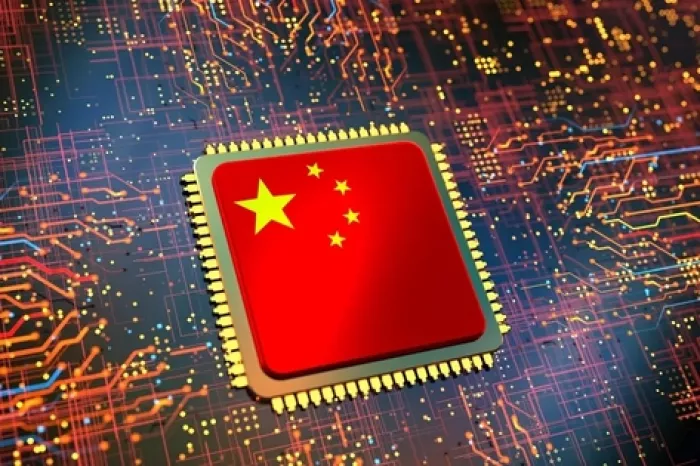
In a fascinating turn of events, China's artificial intelligence (AI) chip industry is experiencing an unprecedented surge, minting new billionaires even as the broader Chinese economy grapples with significant headwinds. Far from stifling innovation, stringent US chip bans appear to have inadvertently supercharged the nation's drive towards self-sufficiency in this critical technology, reshaping the global semiconductor landscape.
The narrative of economic slowdown and geopolitical friction has often overshadowed tales of remarkable resilience, but the China AI chip development sector stands as a striking counter-example. At the heart of this boom are visionary entrepreneurs like Chen Tianshi, co-founder of Cambricon Technologies, who has now ascended to become China's richest AI chip billionaire. His success, and that of many others, underscores a strategic shift and accelerated domestic investment.
The Unintended Consequence of Sanctions: A Supercharged Domestic Industry
For years, China's reliance on foreign, particularly American, semiconductor technology was a known vulnerability. When the US chip ban impact on China AI began to intensify, many predicted a significant slowdown in China's technological ambitions. However, the reality has been quite the opposite. These restrictions have acted as a powerful catalyst, compelling Chinese companies and the government to pour resources into indigenous research, development, and manufacturing capabilities.
This forced localization has not only spurred massive capital expenditure within the country but has also ignited a fervent entrepreneurial spirit. Companies that once might have struggled for funding or market share against established international giants are now flourishing, benefiting from national mandates to prioritize domestic solutions. This protectionist environment, born out of necessity, has created fertile ground for homegrown champions to emerge and thrive, securing substantial government backing and private investment.
New Fortunes Forged in Silicon: The Rise of Chinese AI Chip Billionaires
The financial markets are reflecting this incredible growth. Startups focused on designing and producing AI-specific semiconductors are attracting enormous valuations. Cambricon Technologies success story is particularly illustrative; founded by academics with deep expertise in neural network processors, the company has seen its valuation skyrocket. This meteoric rise has directly contributed to the creation of new wealth, seeing several Chinese AI chip billionaires join the ranks of the nation's wealthiest individuals.
These burgeoning fortunes are not merely abstract figures; they represent tangible investments in research and development, talent acquisition, and scaling production. The emphasis is on developing chips optimized for AI tasks—from edge computing devices to large-scale data centers—ensuring that China can power its vast AI ambitions without external dependencies. This includes everything from natural language processing and computer vision to autonomous driving and smart city initiatives.
Navigating Challenges and Charting the Future
While the current boom is undeniable, the path forward is not without its challenges. The most advanced semiconductor manufacturing processes still largely reside outside China. Bridging this gap requires sustained, multi-decade investment in both fundamental research and complex fabrication technologies. However, the determination is evident, with significant national resources earmarked for overcoming these hurdles.
The long-term outlook for the future of China's AI semiconductor market remains exceptionally strong. With a colossal domestic market for AI applications, an increasingly skilled workforce, and unwavering strategic support from the government, China is well-positioned to continue its trajectory toward AI chip independence. The current wave of billionaire founders is not just a testament to personal achievement but a powerful indicator of a broader national strategy taking root and yielding impressive results, redefining what it means to be a global tech power.

Comments