Best AI Tools for Lead Generation and CRM That Actually Improve Sales Outcomes

Trevor Hall
Sales teams do not struggle because they lack tools. They struggle because they use too many tools that do not talk to each other, surface weak leads, or demand constant manual work. AI has changed that landscape, but only when it is applied thoughtfully.
The top AI tools for lead generation and CRM today focus on one thing above all else, helping teams spend time on real opportunities rather than busywork. Instead of flashy promises, the strongest platforms rely on predictive scoring, intent data, enrichment, and automation that measurably improves conversion rates.
This guide cuts through the noise. Rather than separating tools into rigid buckets, we look at the best AI-powered platforms that help you find leads, qualify them, and manage relationships in one connected workflow.
Quick Verdict: The 3 Best AI Tools Overall
If you want the short answer before diving deeper, these three tools stand out for most teams in 2025.
1. Apollo is the best all-around tool for sourcing, enriching, and syncing B2B leads into a CRM.
2. HubSpot CRM with AI offers the best balance of free access, usability, and scalable AI features.
3. Zoho CRM with Zia AI delivers the best value for growing teams that want strong AI without enterprise pricing.
These tools consistently perform well in real-world use, integrate smoothly with modern sales stacks, and offer AI features that reduce friction instead of adding it.
Apollo: A Practical Foundation for AI-Driven Lead Generation
Apollo has become one of the most widely adopted AI-powered lead generation platforms because it solves a real problem, finding, qualifying, and managing B2B leads in one place.
At its core, Apollo combines a large, compliant contact database with AI-assisted filtering and scoring. Instead of exporting endless lists, users can narrow prospects by intent signals, company size, role, and activity, then push qualified leads directly into their CRM. This tight loop between sourcing and outreach is where Apollo performs best.
Apollo’s AI does not try to replace human judgment. It prioritizes leads based on likelihood to convert, helping sales teams focus on prospects already showing buying signals. Multichannel outreach support through email and LinkedIn workflows further reduces tool switching.
The main downside is cost at scale. While the free tier is generous, larger teams can see expenses rise quickly. Still, for most B2B organizations, Apollo earns its place as a core lead generation engine.
HubSpot CRM: AI-Powered CRM Without the Complexity
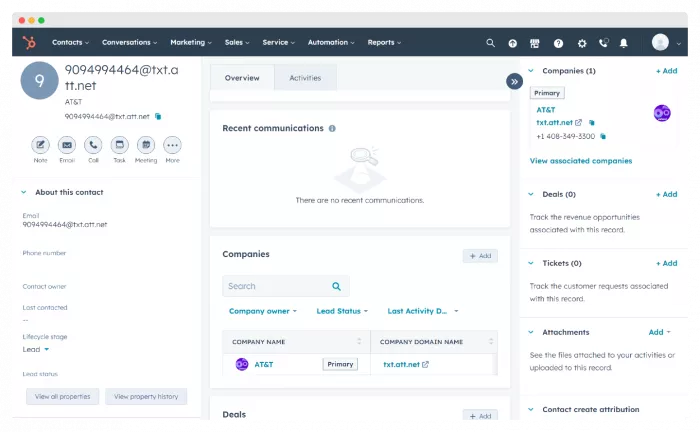
HubSpot’s biggest advantage has always been accessibility, and its AI features build on that strength rather than complicating it. The free CRM remains one of the best entry points for teams that want structure without friction, while paid tiers unlock automation, AI email personalization, and predictive insights.
What makes HubSpot especially effective is how naturally AI fits into everyday tasks. Sales reps do not need to learn AI as a separate system. It quietly assists with email suggestions, follow-ups, and lead prioritization. For many teams, this leads to faster adoption and cleaner data.
HubSpot’s AI also integrates well with lead generation tools like Apollo, Clay, and website intent platforms. This makes it a strong central hub even if leads are sourced elsewhere.
The trade-off is pricing at higher tiers. Advanced AI and automation features are locked behind Professional and Enterprise plans, which can feel expensive for smaller businesses. Even so, HubSpot remains one of the safest long-term CRM choices for teams that value reliability and ease of use.
Zoho CRM with Zia AI: High-Value AI for Growing Teams
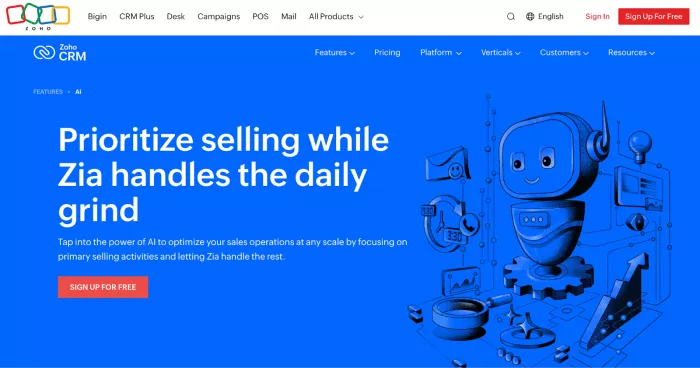
Zoho CRM, powered by its AI assistant Zia, consistently punches above its weight. It offers lead scoring, anomaly detection, forecasting, and conversational insights at a price point far below most enterprise CRMs.
Zia’s strength lies in operational intelligence. It flags unusual activity, predicts deal outcomes, and automates reports that would otherwise require manual analysis. For growing teams, this often results in shorter sales cycles and fewer missed opportunities.
Zoho also benefits from a broad ecosystem. Teams can expand into marketing automation, help desk tools, and analytics without leaving the platform. This keeps data centralized and workflows consistent.
While some advanced AI features are reserved for higher-tier plans, Zoho still delivers meaningful automation at mid-market pricing, making it one of the most cost-effective AI CRMs available.
Clay: Precision Lead Enrichment for Custom Workflows
Clay is not a traditional CRM and it does not try to be one. Instead, it focuses on high-intent lead discovery and enrichment, giving teams fine-grained control over how data is sourced and combined.
Using AI and integrations, Clay allows users to pull signals from multiple sources such as LinkedIn, firmographic data, and intent platforms, then shape them into highly targeted prospect lists. This is especially valuable for outbound-focused teams that care deeply about personalization and relevance.
The trade-off is complexity. Clay has a learning curve, and teams without clear workflows may find it overwhelming. When paired with a CRM like HubSpot or Zoho, however, it becomes a powerful upstream intelligence layer.
Seamless.AI and Customers.ai: Solving Specific Lead Gaps
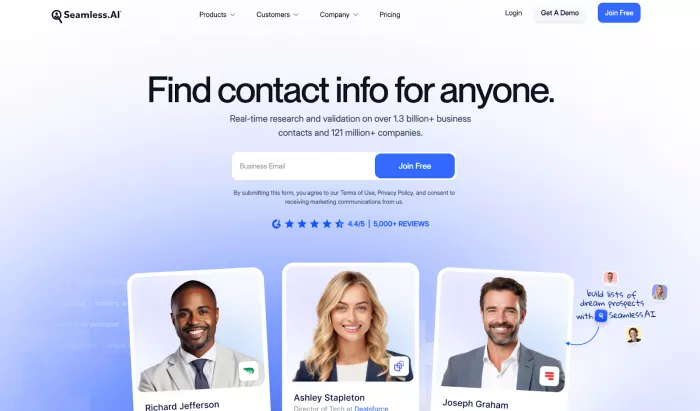
Seamless.AI focuses on fresh B2B contact data, particularly for teams targeting specific regions or industries. While compliance considerations vary by market, many users value its accuracy and speed when filling pipeline gaps.
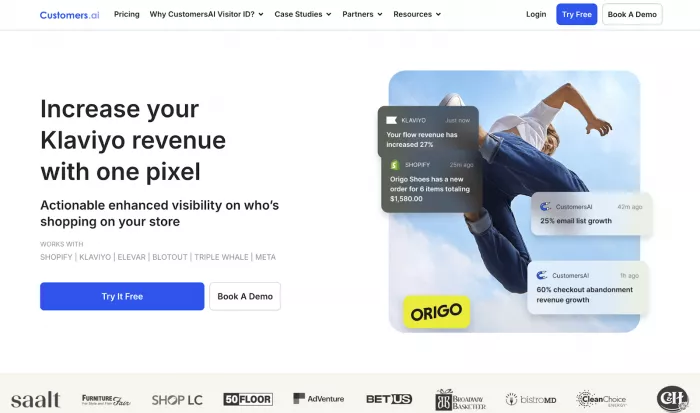
Customers.ai takes a different approach by converting anonymous website visitors into identifiable leads. Instead of sourcing externally, it captures intent from on-site behavior, making it a strong complement to inbound-focused strategies.
Both tools work best when used to solve specific problems rather than as all-in-one platforms.
Pipedrive, Freshsales, and Nimble: CRM Simplicity With AI Assist
Pipedrive remains popular among SMBs because of its visual pipelines and AI sales assistant, which helps reps prioritize deals and forecast outcomes without heavy setup. Its AI features are helpful but not overly predictive, keeping the platform approachable.
Freshsales offers bots, scoring, and workflow automation at competitive pricing. It suits small teams that want AI support without enterprise-level complexity.
Nimble focuses on relationship intelligence and social integration, providing a 360-degree view of contacts. While less traditional in its CRM structure, it can be highly effective for relationship-driven sales models.
How These Tools Work Best Together
Most high-performing teams do not rely on a single platform. Instead, they use a connected stack that includes a lead sourcing tool such as Apollo or Clay, a central CRM like HubSpot, Zoho, or Pipedrive, and automations through native integrations or tools like Zapier.
This setup allows leads to move smoothly from discovery to deal closure without constant manual handoffs.
Final Thoughts: AI Works Best When It Stays Practical
The top AI tools for lead generation and CRM do not try to impress users with futuristic promises. They quietly improve lead quality, shorten sales cycles, and help teams focus on conversations that matter.
When chosen carefully and combined intelligently, these tools do more than automate sales. They make the process more focused, more human, and more effective.

Comments