Best AI Tools for Keyword Research and Topic Planning

Jane Johnson

Table of Contents
- Why AI Has Changed Keyword Research and Topic Planning
- The Best AI Tools for Keyword Research
- The Best AI Tools for Topic Planning and Discovery
- How to Choose the Right Tool (Without Overthinking It)
- Common Mistakes to Avoid When Using AI for SEO
- Final Thoughts: The Real Value of AI in Keyword Research
Keyword research and topic planning used to be slow, repetitive, and heavily dependent on spreadsheets. Today, AI has changed that completely. Instead of manually guessing what people might search for, modern tools can analyze intent, predict trends, group keywords into meaningful clusters, and even help you plan entire content calendars.
But here’s the catch: not all AI tools are equally helpful, and many articles simply list features without explaining when and why you should use each tool.
This guide is different.
Rather than dumping feature lists, we’ll walk through the best AI tools for keyword research and topic planning, explain what they’re genuinely good at, where they fall short, and how real users can combine them for better results in 2025 and beyond.
Why AI Has Changed Keyword Research and Topic Planning

Traditional keyword research focused almost entirely on search volume and difficulty scores. While those metrics still matter, they rarely explain why someone is searching or what kind of content will actually satisfy them.
AI-powered tools now go much deeper. They analyze live SERPs, user behavior, competitor coverage, and semantic relationships between terms. The result is a shift away from isolated keywords and toward intent-driven topic clusters that reflect how people actually search.
This evolution is especially valuable for:
● Content teams trying to scale without publishing fluff
● SEO professionals managing large sites
● Solo creators who want efficiency without sacrificing accuracy
The real value of AI here isn’t automation alone, it’s better decision-making with less guesswork.
The Best AI Tools for Keyword Research
Semrush: The Most Complete AI Keyword Ecosystem
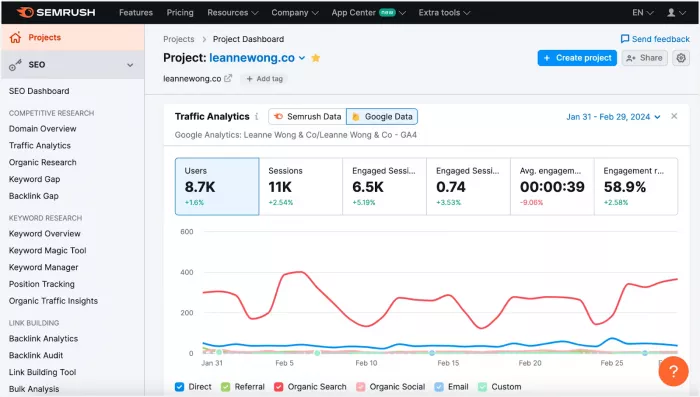
Semrush remains the most well-rounded keyword research tool on the market, especially for users who want everything under one roof. Its Keyword Magic Tool uses AI to generate keyword ideas, filter them by intent, and group them into clusters that make sense for real-world content planning.
What sets Semrush apart is how tightly keyword research connects to competitor analysis. You can see which keywords competitors rank for, identify gaps in your own coverage, and immediately assess whether a topic is worth pursuing based on SERP composition. This is extremely useful when you’re deciding between multiple content ideas and need validation quickly.
That said, Semrush isn’t lightweight. The price can be steep for solo creators, and the interface can feel overwhelming at first. However, for agencies, in-house SEO teams, or serious content businesses, the depth more than justifies the cost.
Best suited for: Full-scale SEO workflows, competitive analysis, and long-term content strategy.
Ahrefs: Exceptional SERP and Intent Insight Across Platforms

Ahrefs approaches keyword research with a strong emphasis on search behavior and SERP dynamics. Its Keyword Explorer doesn’t just show volume, it highlights how search results change over time and how intent differs across platforms like Google, YouTube, and Amazon.
This makes Ahrefs particularly valuable if your content strategy extends beyond blog posts. Video creators, eCommerce sellers, and affiliate marketers often benefit from seeing how the same keyword performs in different ecosystems.
Ahrefs doesn’t rely heavily on flashy AI language, but its data modeling and SERP trend analysis are among the best available. The downside is the lack of a free trial, which makes it harder for new users to test before committing.
Best suited for: Advanced SEOs, YouTube-focused strategies, and intent-sensitive keyword decisions.
Moz Pro: A More Approachable Starting Point

Moz Pro is often overlooked, but it still plays an important role—especially for users who want clarity over complexity. Its keyword and domain analysis tools focus on identifying “true competitors,” which is surprisingly helpful for smaller sites that don’t actually compete with major brands.
Moz’s AI-assisted keyword gap analysis is less aggressive than Semrush or Ahrefs, but that can be a good thing for beginners. The platform emphasizes understanding authority, relevance, and ranking potential without drowning users in data.
While it doesn’t shine in multi-platform research, Moz Pro remains a solid choice for teams learning SEO fundamentals or managing modest websites.
Best suited for: Small businesses, beginners, and teams that value simplicity.
Surfer SEO: Turning SERP Data Into Writing Decisions

Surfer SEO approaches keyword research from the perspective of content execution rather than discovery. Instead of handing you long keyword lists, it analyzes the top-ranking pages for a given query and extracts patterns from them—terms used frequently, related subtopics, content length, headings, and structural signals that search engines appear to reward.
What makes Surfer particularly valuable is how tightly keyword insights are integrated into the writing process itself. As you write, the editor updates in real time, showing which important terms are missing and which topics may be underdeveloped compared to competing pages. This removes much of the guesswork during optimization and helps writers make informed decisions without constantly switching tools.
Surfer’s clustering capabilities are also rooted in SERP reality. Rather than grouping keywords purely based on semantic similarity, it clusters them based on shared ranking pages. This ensures that the content you create aligns with how Google already interprets topic relationships, which is especially useful for building pillar pages and supporting articles.
That said, Surfer is not designed to replace a full keyword research platform. It works best once you already have a set of validated keywords and want to optimize content for performance. Used in isolation, it can feel narrow, but when paired with tools like Semrush or Ahrefs, it becomes a powerful on-page and content refinement layer.
Best suited for: Content writers, SEO editors, and teams focused on on-page optimization and SERP-aligned content creation.
WriterZen: Practical Keyword Clustering Without the Overhead
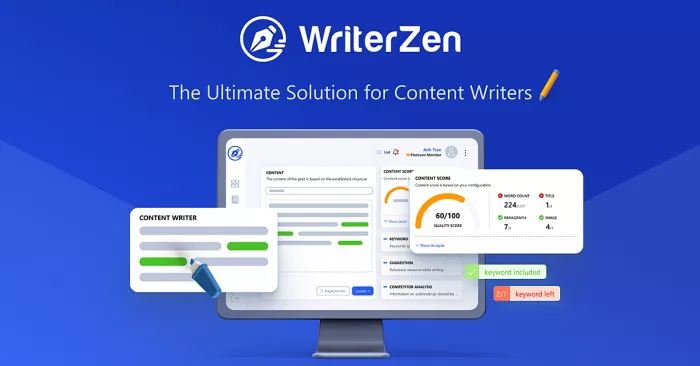
WriterZen takes a more streamlined and budget-conscious approach to keyword research, with a strong emphasis on keyword clustering and topic organization. Instead of trying to be an all-in-one SEO suite, it focuses on helping users turn large keyword lists into structured, actionable topic groups.
Its AI-powered clustering groups keywords based on semantic relevance and search intent, making it easier to plan content silos and avoid keyword cannibalization. This is particularly helpful for users managing blogs with dozens or hundreds of articles, where organization matters more than granular SERP analysis.
WriterZen doesn’t overwhelm users with excessive metrics. The interface is simpler, and the learning curve is lower compared to enterprise tools. For many content teams, this simplicity translates into faster planning and clearer decisions, especially during the early stages of content strategy.
However, WriterZen is intentionally limited in scope. It doesn’t offer deep competitor analysis, backlink insights, or advanced SERP tracking. Because of this, it performs best as a supporting tool, rather than a standalone solution. When combined with a primary keyword research platform, it fills the gap between raw data and content planning extremely well.
Best suited for: Bloggers, content planners, and teams that need efficient keyword clustering and topic organization without the cost or complexity of larger SEO suites.
Free and Niche Keyword Tools Worth Using
Free tools like Google Keyword Planner, Ubersuggest, and Google Trends still have a place, especially for early validation and directional insights. However, they lack deep AI-driven intent matching and clustering.
More niche tools like SpyFu and LowFruits fill specific gaps. SpyFu excels in PPC and paid keyword insights, while LowFruits helps uncover low-competition keywords that larger tools sometimes overlook.
Used strategically, these tools can complement paid platforms rather than replace them.
The Best AI Tools for Topic Planning and Discovery
Exploding Topics: Finding Ideas Before Everyone Else

Exploding Topics is not a keyword research tool in the traditional sense. Instead, it uses AI forecasting to identify emerging trends before they peak. This makes it incredibly valuable for thought leadership, early-stage content, and industries that move quickly.
The tool won’t tell you how competitive a keyword is, but it will tell you what’s about to matter. When paired with a traditional SEO tool, it becomes a powerful early-warning system for content opportunities.
Best suited for: Trend-driven content, startups, and early-mover strategies.
Semrush Topic Research: Turning Keywords Into Content Maps
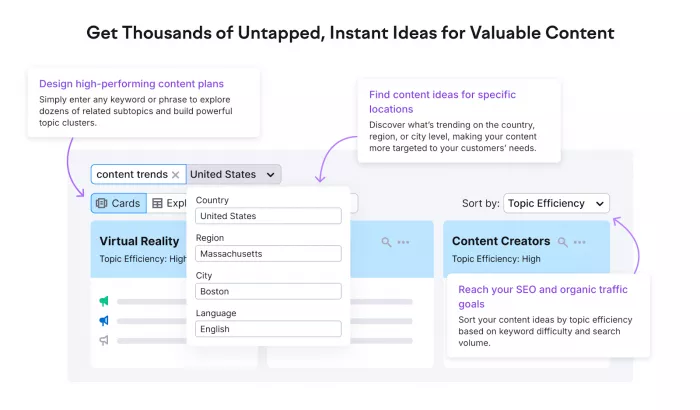
Semrush’s Topic Research tool builds on its keyword data by generating mind maps of subtopics, headlines, and common questions pulled directly from SERPs. Instead of staring at a blank page, users can visually explore how a topic breaks down.
This is particularly helpful during brainstorming sessions or when building pillar pages. While it’s part of a larger paid suite, the speed and clarity it offers can significantly reduce planning time.
Best suited for: Fast ideation and structured content planning.
MarketMuse: Strategic Planning for Large Content Libraries
MarketMuse takes a very different approach. Rather than focusing on individual keywords, it analyzes your entire content inventory to identify gaps, overlaps, and opportunities.
Its AI-generated briefs and competitive coverage analysis are extremely detailed, making it ideal for large websites that need consistency and topical authority. However, this depth can feel excessive for smaller teams or blogs.
Best suited for: Enterprises, publishers, and large-scale SEO strategies.
Narrato and Juma: Collaborative Topic Planning With AI
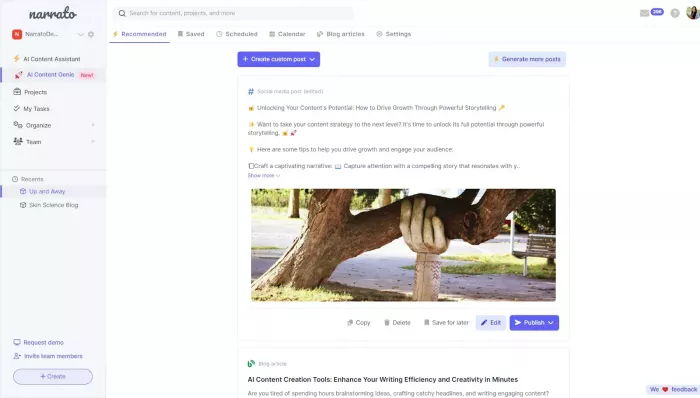

Narrato AI and Juma (formerly Team-GPT) focus on collaboration and workflow efficiency. Narrato generates topic clusters, content calendars, and refresh ideas based on input keywords, making it useful for ongoing blog management.
Juma adds another layer by allowing teams to customize clusters based on intent and collaborate in real time. While it’s a newer tool, it shows promise for teams that value structure and communication alongside AI insights.
Best suited for: Content teams and collaborative environments.
How to Choose the Right Tool (Without Overthinking It)
No single AI tool does everything perfectly. The most effective keyword research and topic planning setups usually rely on a small, complementary stack, where each tool has a clear role instead of overlapping responsibilities.
A Simple, Effective AI Tool Stack
| Purpose | What to Look For | Example Tools |
| Core keyword research | Reliable data, strong SERP analysis, intent signals | Semrush, Ahrefs |
| Clustering & optimization | Accurate topic grouping, on-page guidance, SERP alignment | Surfer SEO, WriterZen |
| Idea & trend discovery | Early signals, emerging topics, content inspiration | Exploding Topics, Narrato |
This approach keeps your workflow focused and prevents you from paying for multiple tools that do the same thing.
What Actually Matters When Evaluating AI Tools
Instead of getting distracted by feature lists or marketing claims, it’s more useful to judge tools based on how well they support real decisions.
| Evaluation Factor | Why It Matters |
| Cluster accuracy | Determines whether your content structure makes sense to search engines |
| SERP alignment | Ensures your content matches what’s already ranking |
| Intent clarity | Helps you create content that satisfies users, not just algorithms |
| Time saved | Reduces manual validation and repetitive research |
AI tools work best when they support your judgment rather than override it. The goal isn’t to automate thinking, but to remove friction so you can focus on creating content that actually serves readers.
Common Mistakes to Avoid When Using AI for SEO
Many users fall into the trap of trusting AI output blindly. While these tools are powerful, they can misinterpret intent or overgeneralize trends.
Avoid:
- Publishing clusters without manual review
- Relying on volume alone
- Ignoring SERP realities
- Treating AI-generated ideas as final answers
The best results come from human judgment guided by AI insights, not automation alone.
Final Thoughts: The Real Value of AI in Keyword Research
The best AI tools for keyword research and topic planning don’t just help you find keywords. They help you understand your audience better. They reduce busywork, surface patterns humans miss, and make content strategy more intentional.
When used thoughtfully, these tools don’t just improve rankings- they improve relevance, clarity, and user satisfaction. And in 2025, that’s what actually wins.

Comments