Are Review Platforms Replacing Traditional Marketing for B2B SaaS?

Trevor Hall
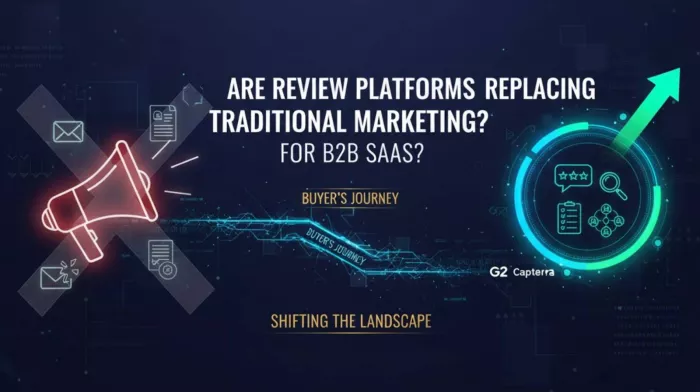
A few years ago, if you wanted to understand how a B2B SaaS company marketed itself, you looked at its website. The homepage told you the story. The pricing page explained the value. Whitepapers, webinars, and email campaigns filled in the rest.
That’s no longer how most buyers decide.
Today, the first serious interaction many buyers have with a B2B SaaS product doesn’t happen on the company’s site at all. It happens on G2, Capterra, TrustRadius, or one of the many review platforms that now sit quietly between marketing and sales. Buyers don’t just glance at these sites. They linger. They compare. They check alternatives. And they do it long before a demo is booked.
This shift has led to a bigger question inside SaaS teams:
are review platforms slowly replacing traditional marketing, or are they just exposing how fragile traditional marketing already was?
The answer is less dramatic than the question but more uncomfortable.
What Changed in the B2B Buying Process
B2B SaaS buyers didn’t suddenly decide to “trust reviews.” They decided they no longer trusted vendor-controlled narratives.
Modern buyers are overloaded. Every product claims to be “leading,” “AI-powered,” and “enterprise-ready.” Feature lists blur together. Analyst reports feel abstract. Cold outreach feels disconnected from real problems.
Reviews fill that gap because they don’t try to persuade. They document experience.
That’s why data consistently shows buyers checking review sites at multiple points in the journey — not just at the end. Reviews influence early research, shortlist creation, and final validation. In many cases, they are the only place where buyers feel they can see trade-offs spelled out plainly.
This isn’t about discovery in the traditional sense. It’s about risk reduction.
Why Review Platforms Feel More Powerful Than Marketing
Traditional B2B marketing is proactive. Review platforms are reactive.
Marketing says, “Here’s what we do.”
Reviews answer, “Here’s what happened when we tried it.”
That difference matters more as deal sizes increase.
Studies consistently show that a large majority of B2B buyers are more likely to purchase after reading trusted reviews, and that many buyers actively seek them out before engaging sales. What’s often missed, however, is where this influence shows up in attribution.
Reviews rarely appear as first-touch sources. They appear quietly in the background — during comparison searches, pricing checks, and competitor research. CRM data routinely underreports this influence, even though closed-won analysis shows review platform activity in a significant share of deals.
In other words, reviews don’t replace marketing attribution models. They break them.
What Review Platforms Actually Do for SaaS Companies
Despite the hype, review platforms are not magical lead machines. Their real impact shows up in three less glamorous areas.
First, they shape perception before contact. By the time a buyer fills out a demo form, their expectations have already been calibrated by peers — often for better and worse.
Second, they compress decision-making. When buyers can see patterns across dozens or hundreds of reviews, uncertainty drops. Sales cycles shorten not because marketing got smarter, but because doubt got smaller.
Third, they expose weaknesses. Review platforms don’t just amplify strengths; they surface friction points repeatedly. For companies willing to listen, this becomes product intelligence. For companies that ignore it, it becomes a reputation problem that marketing cannot outspend.
This is why vendors with more reviews consistently see higher profile traffic and stronger pipeline influence. It’s not the badge. It’s the signal density.
Why This Doesn’t Mean Traditional Marketing Is Dead
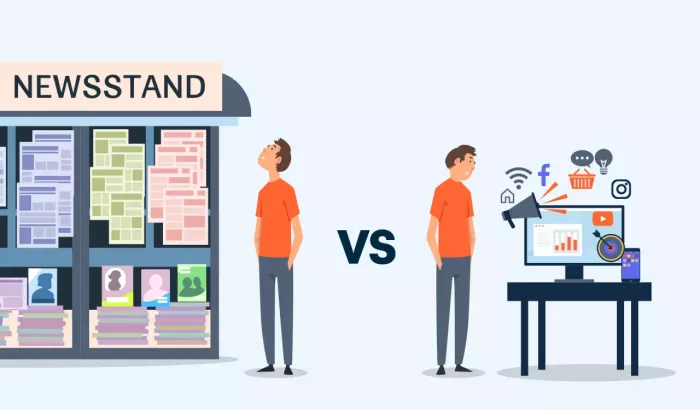
If review platforms were replacing traditional marketing outright, we’d expect to see SaaS companies shutting down content, email, events, and outbound. That isn’t happening.
What is happening is a redistribution of trust.
Traditional channels still generate awareness, educate buyers, and create demand. But they no longer close credibility gaps on their own. Reviews step in where marketing language stops working.
Email campaigns still drive leads. Content still ranks. Referrals still convert best. Reviews don’t replace these channels — they validate them.
That’s why data shows referrals as the strongest lead source, while reviews dramatically amplify conversion rates for higher-priced products. One doesn’t work cleanly without the other.
The Pay-to-Play Problem Nobody Likes to Talk About
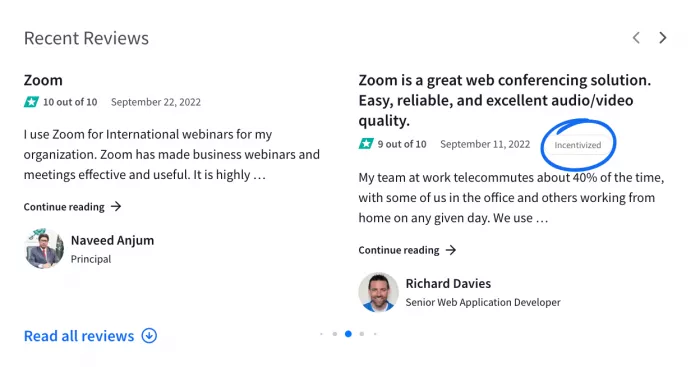
There is a reason some buyers are becoming skeptical of review platforms.
Many platforms incentivize vendors to solicit reviews primarily from promoters. Rankings are often influenced by paid placements. Some products score exceptionally well despite being poorly suited for complex or enterprise use cases.
This doesn’t invalidate reviews — but it does change how they should be read.
Buyers increasingly scan for patterns, not scores. They look for repeated complaints, recurring praise, and consistency across categories. The presence of bias hasn’t killed trust, but it has forced buyers to become more critical readers.
Ironically, this mirrors what happened to traditional marketing years ago.
Why Review Platforms Haven’t Replaced Sales Either

It’s tempting to view review platforms as a shortcut around sales conversations. They are not.
Complex B2B purchases still involve customization, procurement, security reviews, and internal politics. Reviews help buyers justify interest. They do not resolve organizational risk.
What reviews do change is the starting point of the conversation. Sales teams increasingly engage buyers who already understand strengths, weaknesses, and alternatives. The pitch is shorter. The scrutiny is sharper.
In that sense, reviews don’t replace sales — they raise the bar for it.
So What’s Actually Being Replaced?
What review platforms are replacing isn’t marketing itself. It’s unearned credibility.
Old-school tactics that relied on volume over substance — gated ebooks, generic case studies, inflated positioning — lose effectiveness when buyers can cross-check claims instantly.
What survives is marketing that aligns with what reviews already reveal. What fails is marketing that contradicts lived experience.
That’s not a channel shift. It’s an accountability shift.
Where This Is Headed
Review platforms are evolving because they have to. AI moderation, verification, and intent analytics are responses to both buyer skepticism and vendor fatigue. At the same time, AI-driven search threatens to abstract reviews into summaries, reducing direct traffic.
The likely outcome isn’t replacement — it’s fragmentation. Reviews will remain central, but they’ll coexist with communities, social proof, private referrals, and direct conversations in ways that are harder to track.
For SaaS companies, this means one thing:
you can no longer manage perception in one place.
The Bottom Line
Review platforms haven’t replaced traditional marketing for B2B SaaS. They’ve exposed its limits.
They’ve shifted power toward buyers, shortened the distance between promise and reality, and made credibility harder to manufacture. Marketing still matters — but only when it aligns with what customers are already saying elsewhere.
In 2025, the question isn’t whether you’re investing in review platforms.
It’s whether your marketing still works once buyers leave your site.
If the answer is no, the problem isn’t the platform.

Comments