Top AI Visibility Tools to Monitor Brand Presence in AI Search Engines

Trevor Hall

Table of Contents
- What Is AI Visibility?
- 1. Wellows
- 2. Peec AI
- 3. Profound
- 4. AthenaHQ
- 5. Manual Prompt Monitoring
- Why Traditional SEO Tracking Is Not Enough
- How AI Models Decide Which Brands to Mention
- Why Monitoring AI Search Matters for Brands
- What Makes a Good AI Visibility Tool?
- AI Visibility vs Traditional SEO
- How to Use AI Visibility Tools Strategically
- Challenges in AI Visibility Tracking
- The Future of Brand Monitoring
- Final Thoughts
Search behavior is changing fast.
People are no longer relying only on traditional search engines. They are asking questions directly on AI platforms like ChatGPT, Perplexity, and Google’s AI-powered results. Instead of browsing multiple websites, users now receive direct answers that often mention brands by name.
This shift has created a new challenge for businesses. It is no longer enough to rank on Google. Brands are now trying to understand how to rank in ChatGPT and influence how AI systems select and recommend products inside their answers.
If your brand is not being mentioned in these AI-generated responses, you may be losing visibility without realizing it.
This is where AI visibility platforms like Wellows come in. These platforms help businesses monitor how often they appear inside AI answers, compare visibility with competitors, and identify gaps in brand presence across AI search engines.
In this guide, we’ll explore the top AI visibility tools that help monitor brand presence and prepare your business for the future of AI-driven search.
What Is AI Visibility?
AI visibility refers to how often and how clearly your brand appears inside AI-generated answers.
For example, when someone asks:
- “What are the best project management tools?”
- “Top AI SEO platforms?”
- “Best accounting software for startups?”
AI systems generate direct answers. These answers may list tools, compare brands, or recommend certain products.
If your brand is mentioned, you gain exposure.
If it is not mentioned, you are invisible in that interaction.
Unlike traditional SEO, there are no simple rankings to check. AI responses are dynamic. They can change based on phrasing, user history, and context.
That makes monitoring much more complex.
Not all tools offer deep tracking yet. This space is still developing. However, several platforms are leading the way.
Let’s explore them.
1. Wellows
Wellows is an AI visibility platform built to help brands get discovered inside AI search engines.
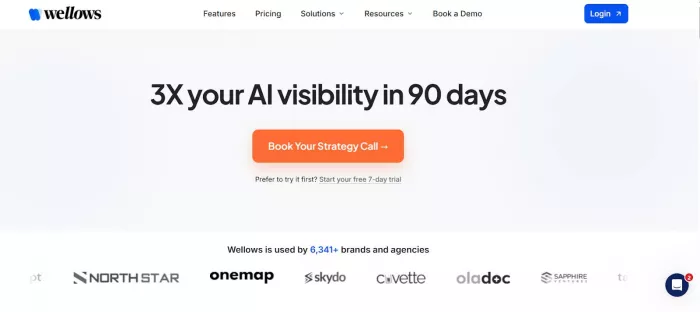
As more users rely on tools like ChatGPT, Perplexity, and Google AI Overviews, brand discovery is shifting away from traditional rankings. Wellows focuses on helping companies understand how visible they are inside AI-generated answers and how to improve that visibility.
Instead of only tracking traffic or keyword rankings, Wellows measures something different — whether your brand is being mentioned, cited, or surfaced in AI responses.
What Wellows Does
Wellows helps teams:
- Track brand mentions inside AI-generated answers
- Monitor visibility across AI platforms
- Compare brand presence with competitors
- Identify prompts where competitors appear but you do not
- Discover gaps in AI-driven discoverability
For example, if users frequently ask AI tools, “What are the best AI marketing platforms?” and your competitors are consistently mentioned while your brand is missing, Wellows highlights that gap. This allows agencies or marketing teams to take action before visibility declines further.
Why Wellows Is Useful for Agencies
For agencies, AI visibility is quickly becoming part of client expectations.
Clients want to know:
- Why competitors are being recommended in ChatGPT
- Why their brand is missing from AI-generated summaries
- How they can increase visibility in AI-driven search
Wellows provides structured tracking that agencies can use to answer these questions with data instead of guesswork.
It shifts the focus from traditional rankings to AI-driven discoverability. Since AI answers often give direct recommendations, being included in those responses is critical for brand awareness and trust.
Who Should Use Wellows?
Wellows is especially helpful for:
- Startups building early authority\
- SaaS companies competing in crowded markets
- Agencies managing multiple client brands
- Growth teams focused on AI-driven discovery
Instead of manually testing prompts across AI platforms, teams can rely on structured tracking and visibility insights.
As AI search continues to grow, Platforms like Wellows help brands stay present, relevant, and visible in conversations that increasingly shape buying decisions.
2. Peec AI
Peec AI helps brands monitor how they appear in AI-generated responses.
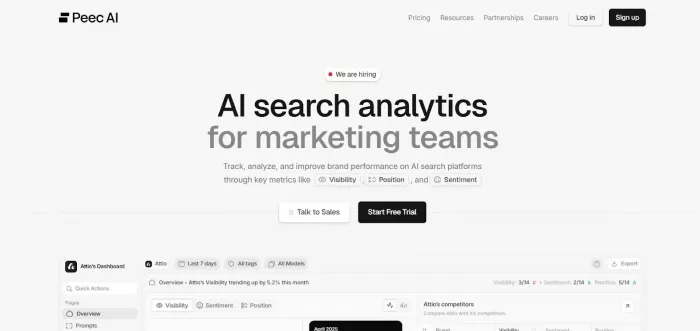
It focuses on prompt tracking. Users can create lists of industry-related questions and see how AI tools respond over time.
What It Does
- Tracks predefined prompts
- Monitors brand and competitor mentions
- Provides visibility insights across AI systems
This is useful because AI answers change. A brand that appears today may not appear next month.
By tracking prompts consistently, marketing teams can monitor changes in representation.
Why It’s Useful
Peec AI works well for companies that want structured monitoring. It gives insight into:
- Which competitors are being recommended
- How AI describes your brand
- Trends in visibility
It is practical for teams that already have defined keyword or prompt strategies.
3. Profound
Profound focuses on AI search analytics.
It is designed for brands that want more advanced insights and reporting around AI-generated responses.
What It Does
- Tracks brand presence inside AI answers
- Analyzes trends over time
- Provides competitive comparisons
- Offers reporting dashboards
This can help teams understand whether their AI visibility is improving or declining.
Why It’s Useful
Large organizations often need structured reporting. Profound provides more detailed analytics that can support strategy decisions.
For example:
- Are AI mentions increasing after PR campaigns?
- Are competitors gaining more AI visibility?
- Are certain prompts driving most exposure?
It is suitable for mid-size to large companies with dedicated marketing teams.
4. AthenaHQ
AthenaHQ focuses on monitoring brand positioning inside AI systems.
Beyond simple mention tracking, it analyzes how brands are described.
What It Does
- Monitors AI-generated responses
- Analyzes brand positioning
- Compares competitors
- Identifies perception patterns
AI does not just mention brands — it frames them in specific ways. It may describe one tool as “budget-friendly” and another as “enterprise-grade.”
Understanding this positioning is important.
Why It’s Useful
Brand perception matters. If AI consistently describes your competitor as “the leading solution,” that can influence user trust.
AthenaHQ helps teams monitor and adjust messaging strategies accordingly.
5. Manual Prompt Monitoring
Not every company uses paid tools. Some teams track AI visibility manually.
They:
- Create a list of industry-related prompts
- Test them regularly on AI platforms
- Record brand mentions
- Track competitor visibility
- Store results in spreadsheets
Benefits
- Low cost
- Full control over prompts
- Flexible
Limitations
- Time-consuming
- Hard to scale
- No automation
- Difficult to analyze trends
Manual tracking can work for small teams or early-stage startups, but it becomes inefficient as prompt lists grow.
Why Traditional SEO Tracking Is Not Enough
Traditional SEO tools track:
- Keyword rankings
- Organic traffic
- Backlinks
- Click-through rates
But AI search engines do not work the same way.
They:
- Summarize information from many sources
- Combine multiple references into one answer
- Mention brands directly
- Often reduce the need for clicks
You might rank #1 on Google for a keyword, but still not be mentioned in AI-generated answers.
That is a major shift.
AI visibility tools fill this gap by tracking how AI models represent your brand.
How AI Models Decide Which Brands to Mention
Understanding how AI models work helps improve visibility.
AI systems typically rely on:
- Trusted websites
- Strong brand mentions
- Clear and consistent positioning
- Structured content
- Media coverage
They do not simply rank websites. Instead, they synthesize information from many sources.
This means your brand’s overall digital presence matters more than a single ranking.
To improve AI visibility, consider:
- Publishing clear, helpful content
- Getting mentioned in trusted publications
- Building authority in your niche
- Maintaining consistent brand messaging
- Improving structured data and clarity
AI models look for signals of authority and relevance.
Why Monitoring AI Search Matters for Brands
Here are a few reasons why AI visibility should be on every marketing team’s radar.
1. Brand Mentions Influence Decisions
When AI tools recommend products, users often trust those suggestions. If your competitor is mentioned repeatedly and you are not, users may assume your competitor is more credible.
2. Zero-Click Behavior Is Growing
Many users now get answers without visiting websites. If your brand is not part of those answers, you lose exposure before users even consider clicking.
3. AI Shapes Brand Perception
AI does not just list brands. It describes them. It compares them. It frames them in a certain way.
Monitoring helps you see how your brand is positioned.
4. Competitive Advantage
Most companies are still focused only on traditional SEO. Brands that monitor AI visibility early will gain insights others do not have.
What Makes a Good AI Visibility Tool?
Before selecting a tool, consider whether it can:
- Track brand mentions across multiple AI platforms
- Monitor specific prompts or questions
- Compare brand visibility against competitors
- Show trends over time
- Provide actionable insights
AI Visibility vs Traditional SEO
Let’s compare the two.
| Traditional SEO | AI Visibility |
| Focus on rankings | Focus on mentions |
| Track traffic | Track brand inclusion |
| Optimize for keywords | Optimize for authority and clarity |
| Compete for clicks | Compete for presence in answers |
Traditional SEO is still important. But AI visibility adds another layer.
Brands need both.
How to Use AI Visibility Tools Strategically
Simply buying a tool is not enough. Here is a simple approach to make the most of these platforms.
Step 1: Identify High-Intent Prompts
List questions your target audience might ask.
For example:
- “Best CRM software for small business”
- “Top AI writing tools”
- “Affordable HR platforms”
These prompts matter more than generic terms.
Step 2: Track Competitors
Monitor which brands appear most often.
Ask:
- Are certain competitors dominating?
- Are niche competitors appearing instead of major players?
This helps identify authority gaps.
Step 3: Analyze Brand Positioning
Look beyond mentions. Examine how AI describes your brand.
Is it:
- Affordable?
- Enterprise-focused?
- Beginner-friendly?
If positioning is unclear, your messaging may need adjustment.
Step 4: Improve Authority Signals
Based on insights:
- Build stronger content
- Secure mentions in trusted publications
- Clarify product messaging
- Improve topic coverage
Over time, improved authority increases AI visibility.
Challenges in AI Visibility Tracking
The space is still evolving.
Some common challenges include:
- AI answers change frequently
- Different platforms produce different results
- Personalization can affect responses
- Tracking at scale is complex
That is why structured tools are becoming important.
As AI search continues to grow, these tools will likely become as common as traditional SEO platforms.
The Future of Brand Monitoring
AI search is not replacing traditional search entirely. But it is reshaping how users discover brands.
In the coming years, we can expect:
- More AI-driven product recommendations
- More direct comparisons inside answers
- Less browsing through multiple pages
- Greater influence of AI summaries
Brands that monitor and adapt early will gain visibility advantages.
Those who ignore AI search may slowly lose brand exposure without realizing it.
Final Thoughts
Search behavior is evolving.
Users are asking AI tools for recommendations, comparisons, and advice. These tools respond by directly mentioning brands.
If your brand is not part of those answers, you are missing visibility in an important channel.
AI visibility tools help you:
- Track brand mentions
- Compare competitors
- Understand positioning
- Identify gaps
- Improve discoverability
Traditional SEO still matters. But monitoring AI search presence is now becoming just as important.
Brands that combine both strategies will stay ahead.
Now is the time to start tracking how AI sees your brand — before your competitors take the lead.

Comments